
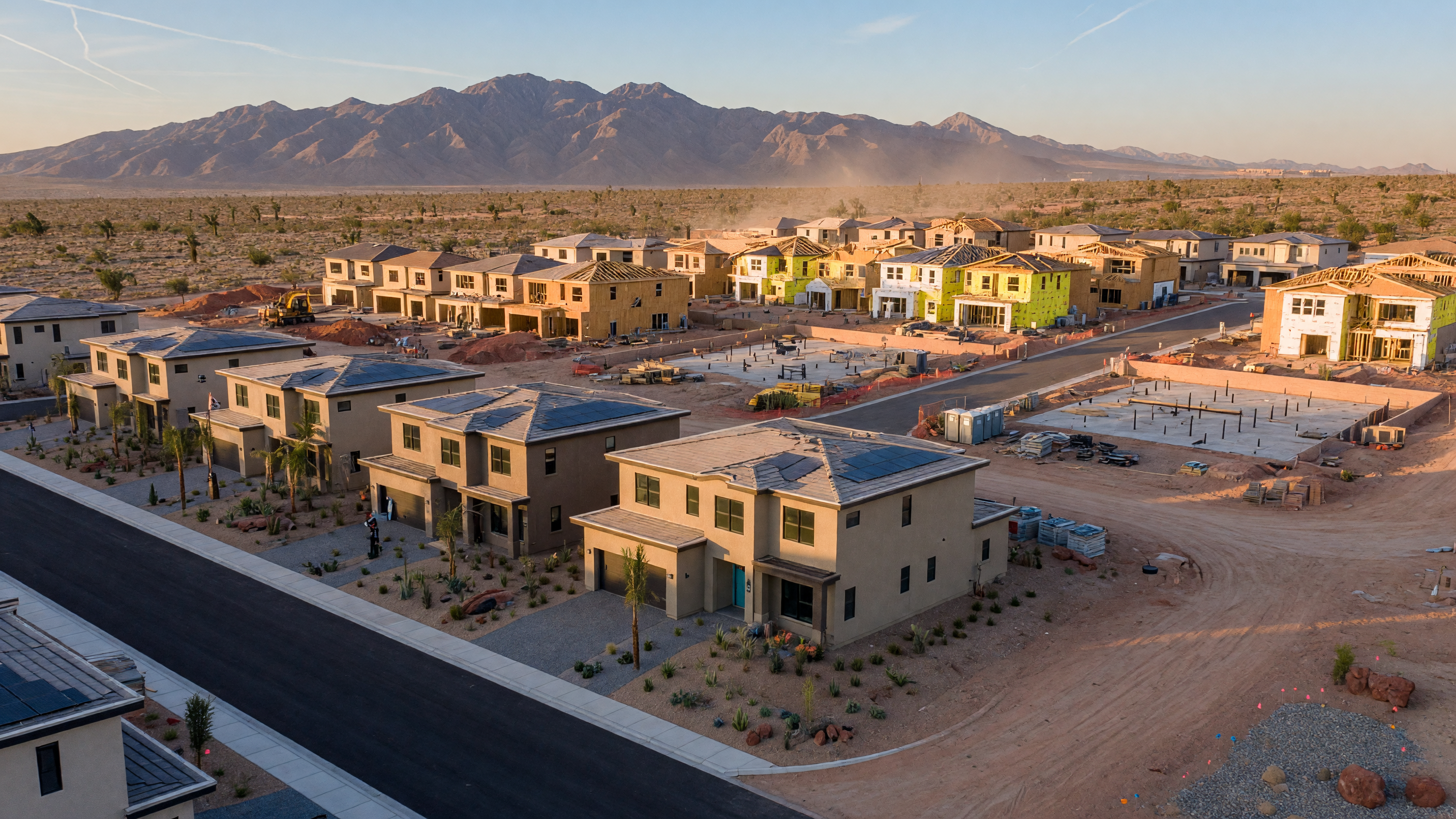
Las Vegas is in the middle of one of the largest new construction booms it has seen in over a decade. Summerlin is adding 11 new neighborhoods in 2026. Henderson is expanding with communities like Cadence and Inspirada. North Las Vegas broke ground in April on over 400 acres of new residential development near Alta Drive. Mountain's Edge continues to grow in the southwest corridor. And Skye Canyon in the northwest is drawing buyers with newer construction and outdoor-oriented amenities.
If you have been thinking about buying new construction, the current market presents a genuinely favorable environment. Builder incentives are at some of the most aggressive levels we have seen in years, with rate buydowns, closing cost credits, and upgraded finishes being offered to move inventory. But before you walk into a model home and fall in love with a floor plan, there are some critical things you need to understand about how the new construction process actually works — and how to protect yourself along the way.
This is not about scaring you away from new construction. It is about making sure you go in with your eyes open, because the builder's sales agent works for the builder. Not for you.
The Builder's Sales Agent Is Not Your Agent
This is the single most important thing to understand about buying new construction. When you walk into a builder's model home, the sales consultant sitting at the desk is employed by the builder. Their job is to sell the builder's homes at the highest possible price with the most favorable terms for the builder. They are friendly, knowledgeable, and helpful — but they are not representing your interests.
In Nevada, you have the right to bring your own real estate agent to a new construction purchase, and your agent's commission is typically paid by the builder as part of the transaction. Having your own agent means you have someone who is reviewing the purchase agreement on your behalf, advising you on whether the pricing is competitive, negotiating on upgrades and incentives, and watching out for contract terms that could cost you money down the road.
The bottom line: If you are considering new construction, bring an agent from the very beginning — not after you have already signed a purchase agreement. Once you are under contract, adding your own representation becomes significantly more complicated, and in some cases, the builder will refuse to cooperate.
Understanding Builder Incentives: They Are Real, but Read the Fine Print
Builder incentives in 2026 are among the most generous the Las Vegas market has seen in years. Depending on the community and the builder, you may encounter:
- Interest rate buydowns: The builder pays to reduce your mortgage rate by 1 to 2 percentage points for the first one to three years, lowering your initial monthly payment.
- Closing cost credits: A credit of $10,000 to $30,000 applied toward your closing costs, prepaids, or upgrades, depending on the builder's program.
- Free upgrades: Higher-grade flooring, upgraded countertops, premium appliances, or enhanced landscaping packages at no additional cost.
- Design studio credits: A set dollar amount to use toward customization selections during the design appointment process.
These incentives can effectively reduce the net cost of your new home by $15,000 to $30,000 or more. That is real money. But here is what you need to watch for: some builders inflate the base price of the home and then offer incentives that bring the net price back to where it should have been in the first place. Others offer incentives only on specific quick-move-in homes that they need to sell, while holding firm on pricing for to-be-built inventory.
What to do: Ask the builder what the base price of the home would be without any incentives. Compare that base price to recent closed sales of similar homes in the community and in surrounding resale neighborhoods. The incentive is only valuable if the underlying price is fair. An agent who tracks builder pricing across the valley can help you evaluate this objectively.
New Construction vs. Resale: The Real Tradeoffs
One of the most common questions I hear from buyers is whether they should buy new construction or an existing home. The honest answer is that both have real advantages, and the right choice depends on your priorities, timeline, and budget.
New Construction Advantages
- Modern energy efficiency. New homes in Las Vegas are built to current energy codes with better insulation, double-pane low-E windows, high-efficiency HVAC systems, and smart home technology. In a valley where summer electricity bills can exceed $400 per month, a more efficient home saves real money every year.
- Builder warranties. New construction comes with structural warranties (typically 10 years), mechanical warranties (2 years), and workmanship warranties (1 year). These provide protection that resale homes do not offer.
- Customization. When you buy a to-be-built home, you can choose your floor plan, lot location, finishes, and structural options. This level of personalization is not available with resale.
- Builder incentives. As discussed above, the current incentive environment can meaningfully reduce your net cost.
Resale Home Advantages
- What you see is what you get. With resale, you walk through the actual home, see the actual neighborhood, and know exactly what you are buying. New construction sales are based on model homes, renderings, and floor plans — there can be surprises during and after construction.
- Established neighborhoods. Resale homes in established communities like Summerlin Centre, Green Valley, or the original Mountain's Edge villages come with mature landscaping, proven infrastructure, and a track record of property values.
- Potentially better pricing. In the current balanced market, some resale homes are priced competitively or have already been reduced. You may find better overall value in an existing home, especially if you are willing to invest in cosmetic updates.
- Faster timeline. Resale purchases typically close in 30 to 45 days. New construction can take 6 to 14 months from contract to closing, depending on the stage of construction.
Five Questions to Ask Before Signing a New Construction Contract
If you are serious about buying new construction, here are the questions I recommend every buyer ask before signing anything:
The Inspection Question: Yes, You Still Need One
One of the biggest misconceptions about new construction is that because the home is new, it does not need an inspection. That is wrong. New homes can and do have defects — from improperly installed systems to framing issues to incomplete work. A third-party home inspection on new construction is one of the best investments you can make, typically costing $400 to $600 and potentially saving you thousands in post-closing repairs.
I also recommend a pre-drywall inspection if you are purchasing a to-be-built home. This inspection occurs after the framing, electrical, and plumbing are roughed in but before the drywall goes up. It gives you the opportunity to see the bones of the house and catch issues that would be hidden after completion.
Quick Move-In Homes: The Shortcut With Its Own Risks
Many builders in Las Vegas currently have quick move-in (QMI) homes available — homes that are completed or near completion and ready for immediate or near-immediate occupancy. These homes often come with the strongest incentives because the builder is carrying inventory that costs them money every month it sits unsold.
QMI homes can be excellent value, but they also come with specific considerations. The lot, floor plan, and design selections have already been made. You are buying what exists, not what you would have chosen. If the builder selected high-end finishes that push the price above your budget, the incentives may not offset the premium. And because the home is already built, you cannot inspect the framing, plumbing, or electrical before drywall.
What to do: Compare the QMI price and included features to the base price of the same floor plan on a to-be-built contract. If the premium is substantial, determine whether the included upgrades justify the additional cost. A buyer's agent who understands builder pricing can help you break this down.
Where to Find the Best New Construction Value in Las Vegas Right Now
Not all new construction communities offer the same value. Here is where I see the strongest opportunities in the current market:
- North Las Vegas: With over 400 acres of new development near Alta Drive and entry points starting around $370,000 to $385,000, this area offers the most affordable new construction in the valley. Strong rental demand also makes it attractive for investor-buyers.
- Mountain's Edge / Southwest: New communities in the southwest corridor offer family-friendly floor plans with proximity to parks and trails. Competitive pricing relative to Summerlin with strong builder incentives.
- Summerlin West: The premium choice. Eleven new neighborhoods opening in 2026 with builder incentives that can offset the higher base prices. Best suited for buyers who value long-term appreciation and the Summerlin lifestyle.
- Henderson (Cadence / Inspirada): Wide price range from the $340,000s to over $900,000. Henderson's $2.5 billion investment wave — including the Four Seasons, M Resort expansion, and a new sports complex — strengthens the long-term value proposition.
My Advice for New Construction Buyers
New construction can be an excellent path to homeownership in Las Vegas, especially in the current incentive environment. But it requires the same level of due diligence — if not more — than a resale purchase. The builder is a professional seller with a legal team, a pricing strategy, and a contract designed to protect their interests. You should have someone in your corner doing the same for you.
I have helped buyers navigate new construction purchases throughout the Las Vegas Valley, and my approach is simple: I make sure you understand every number in the contract, every term in the warranty, and every incentive on the table. I compare builder pricing to resale comps so you know whether you are getting a fair deal. And I am there for your inspections, your design appointments, and your walk-throughs to make sure the home you are getting is the home you were promised.
If you are thinking about new construction, I would love to walk you through the communities, explain how the incentives work in real terms, and help you decide whether this path makes sense for your situation. No pressure, just honest guidance — the way it should be.
New construction clusters in specific ZIPs: Summerlin (89135, 89138, 89144), Henderson (89002, 89012, 89014, 89015, 89044, 89052, 89074), Mountain's Edge (89178), North Las Vegas (89030, 89031, 89032, 89081, 89084, 89086), and the Southwest (89139, 89141, 89148). Compare what is currently offered on my live search: Search homes in the Las Vegas Valley.
Let me help you navigate the process with confidence.
From comparing builder pricing to reviewing contracts, I will make sure you have the information you need to make a smart, well-informed decision on your new home.