
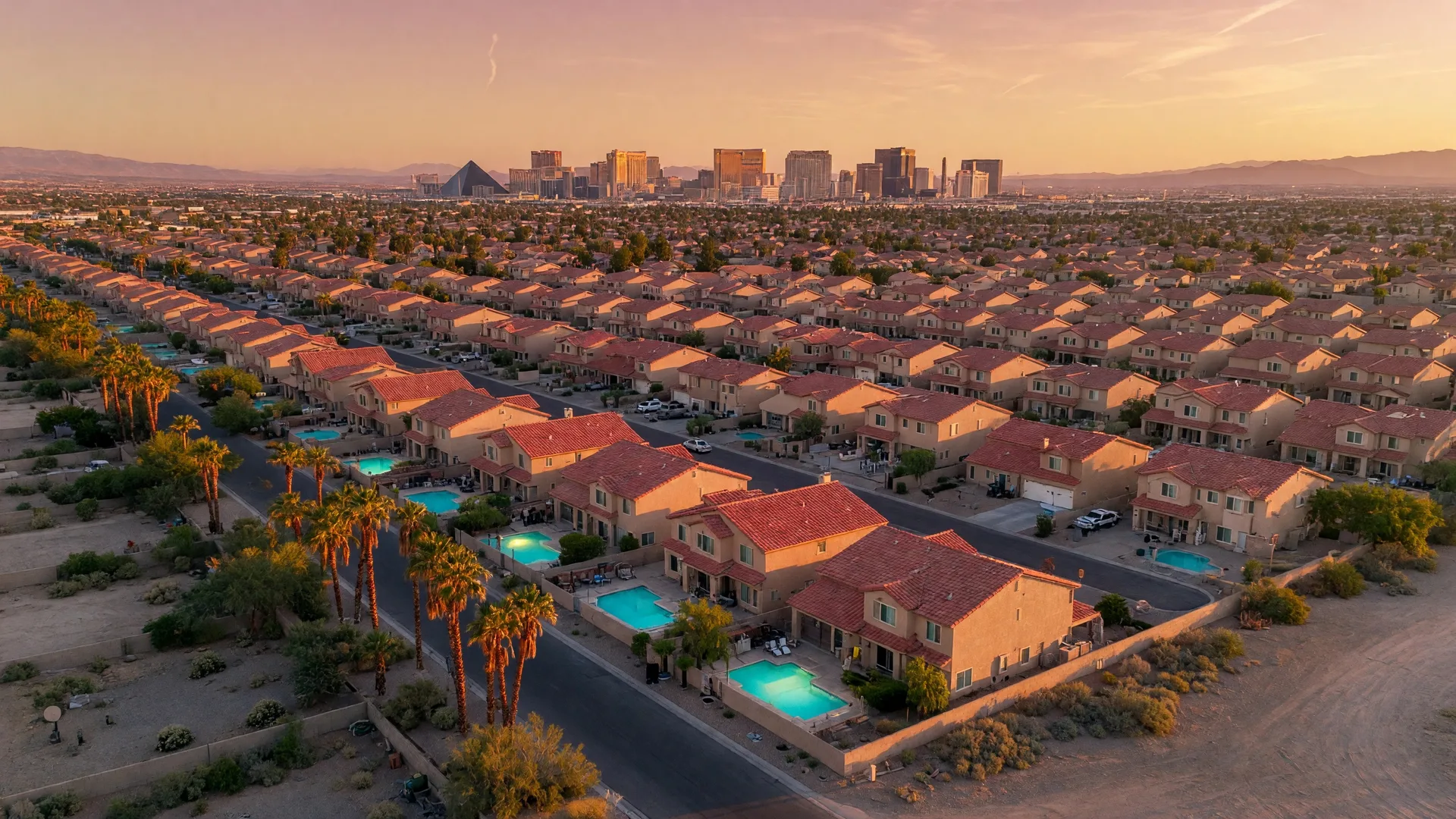
The Las Vegas Valley real estate market reached a milestone in July 2026 that deserves a closer look: the median single-family home price held at $490,000 for a second consecutive month, matching the all-time high first set in May 2026. When you combine that with rising inventory, a gradual increase in days on market, and mortgage rates that have stabilized near 6.54%, you get a market that is sending some clear signals — if you know where to look.
I track these numbers every week, not just to report them, but to understand what they actually mean for the families I work with. Here is my honest, data-driven breakdown of where the Las Vegas Valley market stands in July 2026, and what each data point means for buyers, sellers, and homeowners planning their next move.
The $490K Record: Not a Spike, but a Plateau
The fact that the median price held at $490,000 for two consecutive months tells us something important: this is not a temporary spike driven by a few high-end sales. It is a genuine plateau. Demand is steady enough to sustain prices at this level even as inventory has grown significantly. That is the mark of a healthy market, not a fragile one.
Year-over-year, the median single-family home price has appreciated by approximately 3.7 percent. On a $490,000 home, that translates to roughly $17,500 in equity growth over the past twelve months. For homeowners who bought before 2021, the gains are substantially larger. Many of the clients I work with have seen their property values increase by 40 to 60 percent since purchasing.
It is also important to understand that the $490,000 figure is a valley-wide median. Neighborhood-level numbers tell a more nuanced story. Summerlin continues to command a premium, with year-over-year appreciation in some villages reaching 5.8 percent. Henderson's median sits at approximately $540,000, reflecting a $50,000 premium over the valley median that is supported by strong schools and extensive park infrastructure. Mountain's Edge and the southwest corridor offer more accessible entry points, with medians closer to $430,000 to $460,000 depending on the specific neighborhood.
Inventory Is Up 15.5% Year-to-Date — and That Changes Everything
Here is the number that matters most for buyers: active single-family listings stood at approximately 5,484 in mid-July 2026, up from 4,748 at the start of the year — a 15.5 percent increase year-to-date. When you factor in condos, townhomes, and all other property types, total metro-wide active listings reach roughly 14,868.
This inventory growth is the single biggest change in the Las Vegas Valley market over the past twelve months, and it has fundamentally shifted the dynamics of every transaction. Here is how it breaks down by price band:
For buyers, the message is clear: in the starter and move-up segments, you still need to move decisively on well-priced homes, but you have more options than you have had in years. For sellers, pricing strategy matters more than almost anything else. A home that is priced correctly from day one typically sells in 30 to 40 days. A home that is overpriced by even 3 to 5 percent can sit for twice that long, and every week on the market reduces your negotiating leverage.
Mortgage Rates: Holding Steady at 6.54%
The 30-year fixed mortgage rate has hovered at approximately 6.54 percent through early-to-mid July, remaining relatively flat after the gradual decline from the 2023 peak of nearly 8 percent. While rates are not dropping dramatically, they have stabilized, which creates a predictable environment for buyers planning their budgets.
The Federal Reserve's rate policy continues to influence the direction of mortgage rates. Futures markets are pricing in the possibility of one or two additional rate cuts before the end of 2026, which could push the 30-year fixed toward the 6.0 to 6.2 percent range. However, as I tell every client, trying to time the market on rates is a losing strategy. The question that matters is not "what will rates be next quarter?" but "can I afford the payment today, and does buying now make sense for my long-term financial picture?"
Cash Sales Remain a Significant Factor
One structural feature of the Las Vegas market that continues to surprise out-of-state buyers is the high share of cash transactions. Cash sales still account for roughly 23 percent of all closings in the valley — significantly higher than the national average of roughly 10 percent. This is driven by a combination of investors, relocators from higher-cost states who are selling their previous homes, and retirees moving to the valley with liquid assets.
For buyers using financing, this means you are occasionally competing against cash offers that can close faster and waive certain contingencies. However, in the current balanced market, the cash advantage is less pronounced than it was during the 2021 frenzy. Sellers are more willing to consider financed offers, especially when they include a strong pre-approval and reasonable terms. The key is to work with a lender who can close quickly and an agent who knows how to position your offer competitively.
What July 2026 Means for Buyers
If you have been waiting for the right time to buy, the current data suggests that the window of opportunity is open — but it may not stay open indefinitely. Here is what is working in your favor:
- More inventory means more choices. With 5,484 single-family homes on the market, you have genuine options across neighborhoods. You can compare, take your time, and make a decision based on fit rather than fear of losing a listing.
- Seller concessions are increasingly common. Rate buydowns, closing cost credits, and repair allowances are all on the table. In a competitive but balanced market, sellers understand that they need to offer something beyond just the home itself.
- Rates are better than they were. At 6.54 percent, the 30-year fixed is significantly lower than the peak of 7.9 percent in 2023. The monthly savings compared to two years ago are real, and refinancing remains an option if rates continue to decline.
- New construction incentives are strong. Builders are offering aggressive packages — rate buydowns, free upgrades, closing cost credits — to move inventory in their active communities. If new construction fits your timeline, the deals available right now are worth exploring.
What July 2026 Means for Sellers
If you are thinking about selling, the core message is this: the market is still strong for sellers who approach it strategically. Homes that are priced correctly, presented well, and marketed effectively are selling — and selling at prices that reflect the record-high median. But the days of listing any home and waiting for multiple offers above asking are behind us, at least for now.
- Price to the current market, not last year's comps. The most successful sellers are those who look at what is actually selling today, not what sold three or six months ago. Overpricing is the most common mistake, and it is the most costly.
- Professional presentation is non-negotiable. With more inventory, buyers are comparing your home to five or ten others in the same price range. Professional photography, staging, and minor updates are essential investments, not optional extras.
- Expect and plan for concessions. Nearly one in three closings now involves some form of seller concession. Building a rate buydown or closing cost credit into your pricing strategy from the beginning puts you ahead of sellers who treat concessions as a last resort.
What July 2026 Means for Homeowners
If you are not planning to buy or sell right now, the July 2026 data still matters to you. Your equity is real and measurable. With the median holding at $490,000, homeowners who purchased before the pandemic have seen their property values appreciate substantially. Even homeowners who bought in the past three years are likely sitting on positive equity, given the steady 3 to 4 percent annual appreciation.
The key question for homeowners is: what are you doing with that equity? If it is sitting untapped while you carry high-interest credit card debt or pay for a roof replacement out of pocket, you may be missing an opportunity to optimize your financial picture. A HELOC or cash-out refinance at current rates, used for the right purposes, can be a powerful financial tool. But it needs to be used intentionally, not impulsively.
If you are planning to sell in the next one to three years, starting those preparations now — minor repairs, deferred maintenance, landscaping updates — can make a meaningful difference when you eventually list. In a balanced market, buyers notice the details.
Neighborhood-Level Market Snapshot
Looking Forward: The Second Half of 2026
The consensus among analysts tracking the Las Vegas market is that the second half of 2026 will bring moderate price appreciation in the 3 to 5 percent range, continued inventory growth, and gradual mortgage rate improvement if the Federal Reserve delivers the cuts that markets are pricing in. The wild cards are the broader economy, employment trends, and how the upcoming election cycle affects consumer confidence.
Here is my honest assessment: the market conditions we are seeing in July 2026 are about as balanced and healthy as the Las Vegas Valley has seen in nearly a decade. Buyers have genuine leverage. Sellers who approach the market intelligently are still achieving strong outcomes. Homeowners have real equity that deserves a thoughtful plan.
The question is not whether the market is good. It is whether you have a clear picture of how it applies to your specific situation. Every neighborhood is different. Every price band behaves differently. Every client has a unique timeline, budget, and set of goals. That is where personalized, data-driven guidance matters most.
The Bottom Line
The Las Vegas Valley market in July 2026 is defined by stability. Record prices are holding, but not surging. Inventory is growing, but not flooding. Mortgage rates are steady, but not prohibitive. For the first time since 2018, the market is working for both buyers and sellers — which means the key to success is understanding where the opportunities are for your specific situation.
I have been tracking these numbers every week not because I enjoy spreadsheets (though I do), but because the numbers tell a story. And that story changes depending on who you are and what you are trying to achieve. Whether you are a first-time buyer trying to enter the market, a family looking to move up, or a homeowner wondering if now is the right time to sell, the data is here to guide you.
Let us sit down and go through it together. No agenda, no pressure — just the numbers and an honest conversation about what makes sense for you.
Record prices are not uniform across the valley, so ZIP codes matter: Summerlin (89135, 89138, 89144), Henderson (89002, 89012, 89014, 89015, 89044, 89052, 89074), Mountain's Edge (89178), and the Northwest (89129, 89130, 89131, 89149, 89166). See what is listed in your target area on my live search: Search homes in the Las Vegas Valley.
Let us go through the numbers that matter most to you.
Whether you are buying, selling, or just want to understand where you stand, I will give you an honest, data-driven assessment based on the latest Las Vegas Valley market data. No sales pitch, just real answers.