
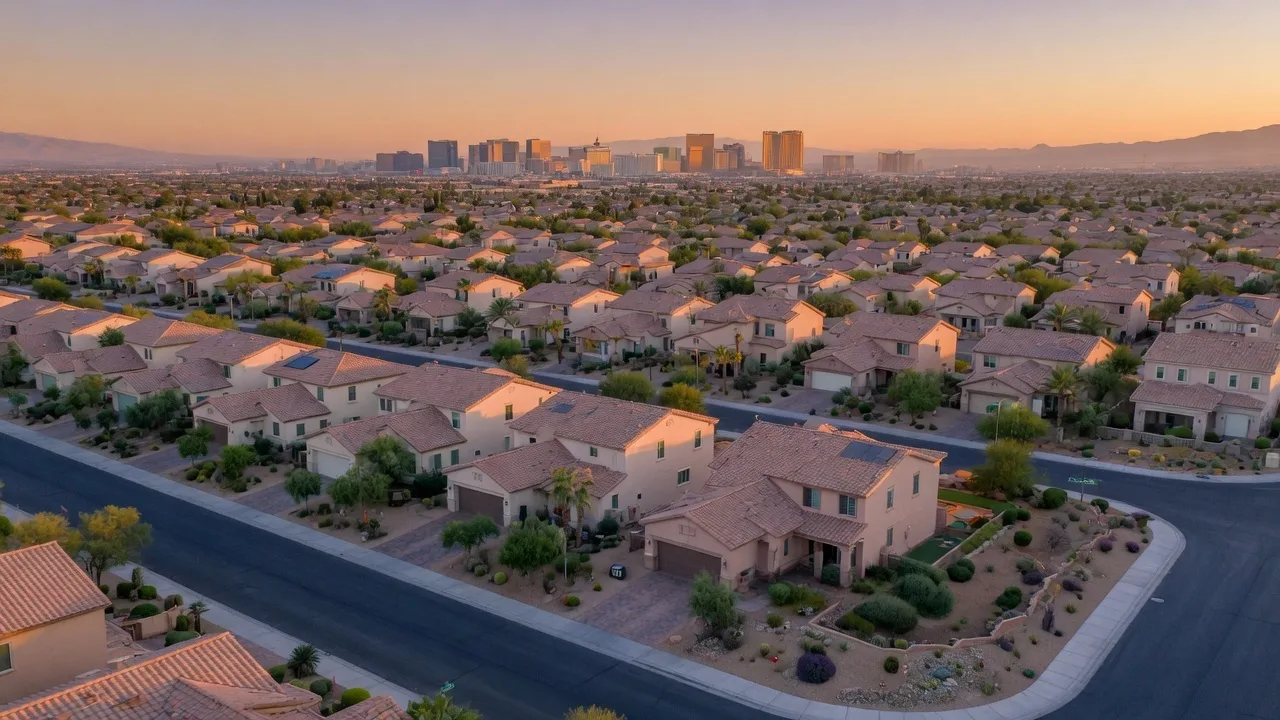
As we move through the final weeks of July 2026, the Las Vegas Valley real estate market continues to show remarkable stability. The median single-family home price has held at $490,000 for three consecutive months, and the broader market remains firmly in balanced territory. But the headlines this week are not just about home prices. Three major developments are reshaping how I think about the valley's long-term trajectory, and they deserve your attention whether you are buying, selling, or simply watching the market.
Here is what is happening right now and what it means for your next move.
The $490K Record Holds: What Stability Tells Us
The valley-wide median single-family home price landed at $490,000 for June, matching the record set in May and extended through early July. This marks the third consecutive month at this level, and the consistency tells an important story: the market has found its equilibrium. Buyers and sellers are agreeing on value, and that agreement is holding.
Year-over-year, prices are up about 1 percent, which is a measured, healthy pace. For context, annual appreciation in the high single digits was common during the pandemic boom, but that pace was unsustainable. A market that gains 1 to 4 percent per year is one where equity builds steadily, buyers can plan with confidence, and sellers can expect a fair price without the volatility that comes with speculative swings.
North Las Vegas continues to show the strongest year-over-year price growth in the valley, with the submarket median rising 6.6 percent to approximately $385,000. That area's affordability relative to Summerlin and Henderson is drawing first-time buyers and investors, and the improving infrastructure and new construction pipeline are supporting those values.
The single-family home market in Summerlin sits well above the valley median, with established village prices ranging from roughly $550,000 to over $1 million depending on the neighborhood. New construction in Summerlin West is commanding premium pricing with strong demand, particularly for the 11 new neighborhoods now open or opening soon.
Summerlin Land Sales: $126 Million Signals Builder Confidence
One of the most significant stories this month is Howard Hughes Holdings' sale of land in Summerlin to three homebuilders for a combined $126 million. This is not just a real estate transaction. It is a powerful vote of confidence in the Las Vegas Valley's long-term growth trajectory from one of the most sophisticated developers in the country.
Here is why this matters for every buyer, seller, and homeowner in the valley. When Howard Hughes sells land at premium prices, it means their data shows strong future demand for housing in Summerlin. Builders are willing to pay premium prices for that land because their own models project that homebuyers will be there to purchase the finished product. And when builders pay more for land, the homes they build on it are priced accordingly, which supports property values in surrounding existing neighborhoods.
If you own a home in Summerlin or are considering buying there, this is a bullish signal. The communities of Summerlin West, including Kestrel, Redpoint, Grand Park, and the Esplanade at Red Rock, are attracting buyers with new floor plans, modern finishes, and proximity to Red Rock Canyon. The Grand Park — at over 90 acres, it is the community's largest park — opened its first phase earlier this year and has already become a major draw for families.
City of Las Vegas Seeks Developer for 11 Downtown Acres
The City of Las Vegas has issued a request for proposals for an 11-acre development site near the intersection of Las Vegas Boulevard and Stewart Avenue, just north of the existing downtown core. The RFP is open to hospitality, entertainment, sports, housing, and office uses. This is a significant step in the ongoing revitalization of downtown Las Vegas, which has already seen billions in investment through the Medical District, the Las Vegas Ballpark, and the new West Hall expansion at the Las Vegas Convention Center.
For homeowners and buyers in nearby neighborhoods, this type of development is a long-term value driver. Downtown revitalization tends to lift property values in a two-to-three-mile radius over time, as new amenities, jobs, and infrastructure improvements make surrounding areas more desirable. Areas like the Arts District, John S. Park, and Huntridge have already benefited from earlier phases of downtown investment, and this latest RFP signals more to come.
Apartment Construction Pipeline Hits Four-Year Low
In a development that may seem counterintuitive given the valley's population growth, the apartment construction pipeline has fallen to its lowest level since 2021, with only about 3,400 units expected to be delivered this year. This is down significantly from the peak years of 2023 and 2024, when developers rushed to meet post-pandemic rental demand.
What is behind the slowdown? Higher construction financing costs and tighter lending standards have made it harder for developers to make the numbers work on new rental projects. At the same time, the stabilization of home prices and the availability of seller concessions in the for-sale market have made homeownership more attractive to renters who were sitting on the sidelines.
For homebuyers, this trend is favorable. When fewer apartments are built, rental supply tightens, which supports rent growth. Higher rents, in turn, make the monthly math of buying versus renting more favorable for households that can qualify for a mortgage. In a market where the median two-bedroom apartment now rents for roughly $1,500 per month depending on location, the payment gap between renting and owning has narrowed meaningfully in many price bands.
Master-Planned Communities Pipeline: What Is Coming Next
Beyond Summerlin's continued expansion, several major master-planned communities are in various stages of development across the valley:
- Cadence, Henderson: Now well-established with thousands of homes built, Cadence continues to expand with new phases and amenity development. Its central location between the 215 and 95, plus proximity to the Galleria Mall area, keeps it one of Henderson's most popular communities for families.
- Meriden, Henderson (KB Home): A new KB Home community in Henderson is adding to the already robust development pipeline in the southeast valley. Henderson continues to attract families with its highly rated schools and reputation as one of the safest large cities in the United States.
- Lake Las Vegas expansion: The luxury community in southeast Henderson is seeing renewed interest with new home construction and resort-style amenities drawing move-up buyers and out-of-state relocators.
- Skye Canyon, Northwest Las Vegas: This master-planned community in the northwest continues to draw buyers with its mountain views, park system, and value proposition relative to the valley's higher-priced submarkets.
California Migration: Still Driving Demand
The flow of relocators from California remains one of the defining demand drivers for the Las Vegas Valley market. While the pace has normalized from the peak pandemic years, California buyers continue to represent a meaningful share of purchase activity. For these buyers, the math is straightforward: selling a home in California at prices that are still significantly higher than Las Vegas, then buying in the valley with cash or a large down payment, often eliminates or drastically reduces monthly housing costs.
This dynamic has a real impact on the local market. Cash buyers from out of state tend to concentrate in higher-price-band neighborhoods like Summerlin, Henderson's Anthem and Seven Hills, and Lake Las Vegas. Their presence supports prices at the upper end of the market while creating a ripple effect that supports the entire valley's price structure.
What These Trends Mean for Buyers, Sellers, and Homeowners
For buyers: The market is as accessible as it has been since before the pandemic. With 2.9 months of supply, seller concessions in roughly 40 percent of deals, and builder incentives that can include rate buydowns and closing cost credits, the conditions are favorable for making a purchase with manageable monthly costs. The key is being prepared, knowing your budget, and working with someone who can help you identify the best opportunities in your target neighborhoods. North Las Vegas and the condo/townhome segment offer the most value right now.
For sellers: The market is still active, but it rewards preparation. Homes that are priced within 2 to 3 percent of market value from the start are selling in roughly 30 to 45 days. Homes that are overpriced sit, and sitting leads to price reductions that cost you negotiating leverage. The Summerlin land sale and downtown development news are positive signals for long-term value, but they do not change the short-term reality that buyers have options. Work with an agent who will give you honest pricing advice, not just what you want to hear.
For homeowners: If you have owned your home for the past three to five years, your equity position is likely stronger than you realize. The valley-wide median has risen from roughly $350,000 in 2021 to $490,000 today. That is $140,000 in appreciation, even before accounting for principal paydown. If you have not checked your home's current value recently, now is a good time to do so. You may have more options than you think.
The Bottom Line
The Las Vegas Valley real estate market in late July 2026 is defined by stability, balance, and a steady undercurrent of development activity that signals confidence in the region's long-term future. Record prices are holding, inventory is providing choice, and the major development stories — the Summerlin land sale at $126 million, the downtown development RFP, and the apartment construction slowdown — each tell part of the same story: Las Vegas continues to grow, and the real estate market continues to evolve in ways that create real opportunity for those who understand the landscape.
Whether you are buying your first home, selling to make a move, or simply want a clear picture of where your neighborhood stands, I would love to help you make sense of what these numbers mean for your specific situation.
The valley-wide numbers are useful, but the real story is in the neighborhoods. Summerlin, Henderson, Mountain's Edge, Northwest Las Vegas, and Aliante each have their own dynamics, and a strategy that works in one may not work in another. Let us sit down and build a plan that fits your goals, your timeline, and your financial situation.
Developments like the Summerlin land sales (89135, 89138, 89144) and downtown projects (89101) shape nearby markets, as do Henderson (89002, 89012, 89014, 89015, 89044, 89052, 89074), Mountain's Edge (89178), and Aliante (89084). Track the current numbers on my live search: Search homes in the Las Vegas Valley.
The valley-wide numbers matter, but your neighborhood tells a different story.
Whether you are buying, selling, or simply exploring your options, I will give you an honest assessment based on the latest data and my firsthand knowledge of Las Vegas Valley communities.