
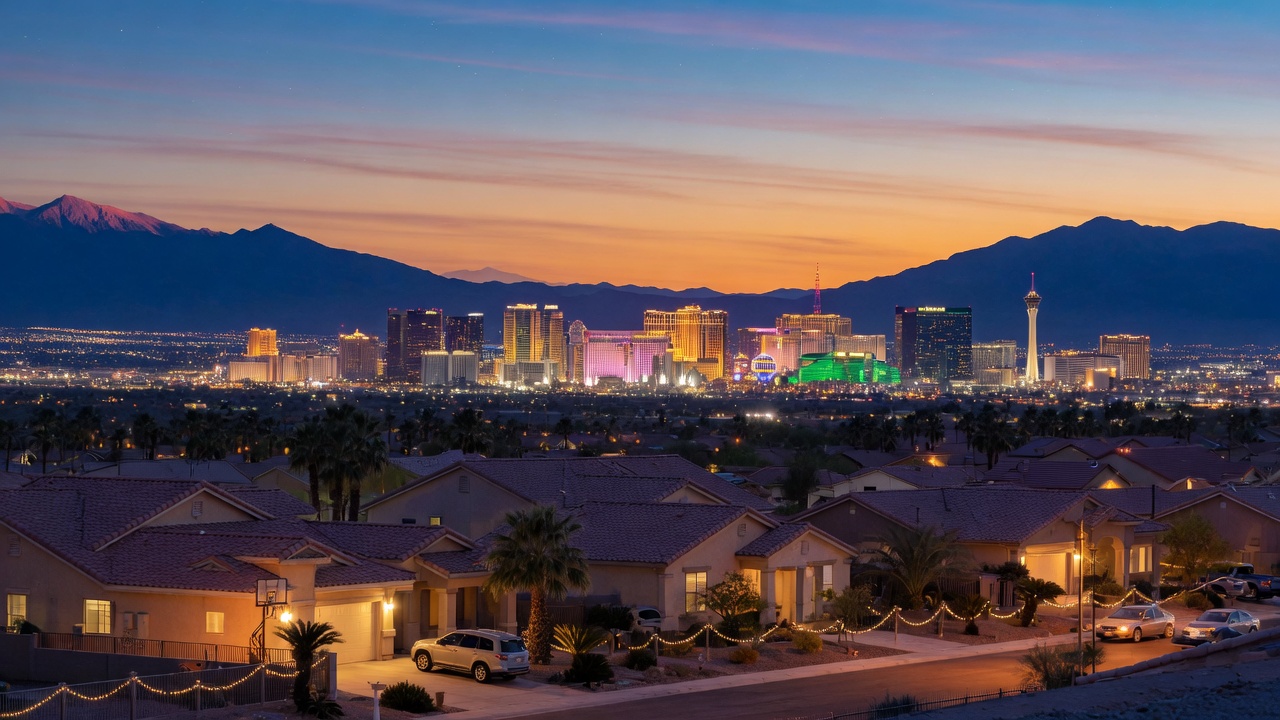
When I published my Summer 2026 Market Update on June 3, the data was already telling a clear story: the Las Vegas Valley had shifted into a balanced market after years of extreme swings. But markets do not stand still, and the latest data coming in for early June is adding new layers to that narrative. Prices have hit record territory. Inventory is still climbing. Mortgage rates remain stubbornly stable. And the gap between homes that sell quickly and homes that sit is widening.
This is not a rehash of the June update. This is a fresh look at the newest numbers and what they mean for anyone planning a move in the second half of 2026.
Record-High Prices — But Context Matters
The Las Vegas Valley median single-family sale price has climbed to approximately $494,000, which represents a new record for the market. That is a meaningful number, and it is worth understanding what is driving it.
The record is not being driven by a frenzy of bidding wars or low inventory. It is being driven by a shift in the mix of homes that are actually closing. Higher-priced properties — particularly in Summerlin, MacDonald Highlands, and the luxury corridor along the western edge of the valley — are making up a larger share of total sales. When the mix skews toward higher-end transactions, the median moves up even if prices in individual neighborhoods remain flat or decline slightly.
In practical terms, this means that while the headline number says "record high," many buyers and sellers in mid-price-range neighborhoods are experiencing a market that feels more stable than explosive. A buyer in North Las Vegas or Aliante is not competing in the same market as a buyer in The Ridges or MacDonald Highlands. The valley-wide number is a useful benchmark, but it does not tell your individual story.
What to do: If you are buying or selling, do not anchor your strategy to the valley-wide median. Look at closed sales in your specific ZIP code and neighborhood within the past 60 to 90 days. That is the data that actually matters for pricing your home or evaluating a purchase.
Inventory Is Rising, and It Changes the Conversation
The housing supply in southern Nevada stands at approximately 3.3 months of inventory, up from earlier in the spring. That is still below the six-month threshold that economists typically consider a fully balanced market, but it represents a significant increase from the two-month levels we saw during the pandemic-era frenzy. For buyers, this is meaningful.
More inventory means more choices, more time to evaluate properties, and more room to negotiate on price, repairs, and contingencies. It also means that homes which are overpriced or poorly presented are sitting on the market significantly longer. The data shows that roughly 38 percent of active listings have undergone at least one price reduction — a figure that has been climbing steadily through the spring.
For sellers, the implication is straightforward: the homes that sell in this market are the ones that are priced competitively from day one, presented professionally, and marketed aggressively. A home that lingers on the market for 60-plus days with no activity is almost always a pricing or presentation problem, not a market problem.
What to do: Sellers, before you list, ask your agent for a realistic comparative market analysis based on actual closed sales — not active listings or aspirational pricing. Buyers, use the increased inventory to your advantage. Tour multiple homes, compare features and value, and do not feel pressured to make an offer on the first property you see.
Mortgage Rates: Stable but Not Standing Still
The 30-year fixed mortgage rate is currently hovering between 6.3 and 6.6 percent, with 15-year fixed rates in the 5.6 to 5.9 percent range. These numbers have been remarkably consistent through the first half of 2026, and most industry forecasts suggest they will remain in this band through the rest of the year.
The Federal Reserve has held rates steady through the first half of 2026, citing persistent inflation and a resilient job market. While earlier forecasts had predicted rates would ease into the 5 percent range by mid-year, that timeline has shifted. Most projections now suggest rates will remain in the 6.0 to 6.5 percent range through early 2027.
Here is a calculation I walk through with almost every buyer who asks whether they should wait for rates to drop:
- At today's rate (6.4%): A $450,000 home costs approximately $2,820/month in principal and interest.
- If rates drop to 5.8% in 12 months: But prices rise 3%, that same home now costs $463,500, and your payment at the lower rate is roughly $2,710/month.
- The result: You saved $110 per month on the rate but paid $13,500 more upfront. It takes over 10 years of monthly savings to recoup the higher purchase price.
The takeaway is not that rates do not matter. They absolutely do. The takeaway is that timing the rate market is a guessing game, and the cost of guessing wrong often exceeds the benefit of guessing right. The best time to buy is when you find the right home at a price your budget supports and a rate you can manage.
The Two-Speed Market: What Is Selling and What Is Not
One of the most important dynamics in the current Las Vegas market is the growing divide between homes that sell and homes that sit. Understanding this divide is the key to positioning yourself, regardless of which side of the transaction you are on.
Homes That Sell Quickly (Under 30 Days)
- Priced within 2–3 percent of comparable closed sales
- Professional photography and staging completed before listing
- Clean, well-maintained condition with no deferred repairs
- Desirable neighborhoods (Summerlin, Cadence, Green Valley, Aliante)
- Competitive financing with pre-approval in hand
Homes That Sit (60+ Days)
- Priced above comparable sales with no justification for the premium
- Amateur photography or no photos at all
- Deferred maintenance, clutter, or outdated finishes
- Locations with less buyer demand or longer commute patterns
- Unrealistic seller expectations about pricing or timeline
The gap between these two categories is getting wider, not narrower. In a balanced market with rising inventory, the margin for error on pricing and presentation shrinks. Homes that get it right from the start capture the buyers who are active and qualified right now. Homes that miss the mark end up chasing the market down with price reductions that signal desperation rather than strategy.
Neighborhood-Level Opportunities in the Second Half of 2026
Here is where I see the most compelling opportunities and challenges as we head into the second half of the year:
- Summerlin: Still the valley's strongest submarket with median prices ranging from $533,000 in the north villages to over $800,000 in the south. New construction continues to draw national relocators. If you are buying in Summerlin, expect to compete, but also expect strong long-term appreciation.
- Henderson: The city is in the middle of a $2.5 billion investment wave — the Four Seasons, M Resort expansion, a new sports complex, and more. Communities like Cadence and Inspirada offer strong value with a wide price range ($340K–$900K+). The long-term appreciation case is solid.
- North Las Vegas / Aliante: The valley's affordability leader at $370,000 to $385,000. New development on 400+ acres near Alta Drive will expand housing options. Strong rental demand makes this area attractive for investors as well as first-time buyers.
- Mountain's Edge / Southwest: Continued growth in new construction, with strong appeal for families. Proximity to the southwest corridor and outdoor recreation (Exploration Peak Park) supports steady demand.
- Skye Canyon / Northwest: A standout performer with approximately 8 percent year-over-year price growth. Newer construction and outdoor-oriented lifestyle are drawing buyers willing to pay a premium for quality and community programming.
My Recommendations for the Second Half of 2026
For Buyers
- Get pre-approved now. With rates stable but elevated, knowing your exact budget before you start touring homes saves time and eliminates surprises. A pre-approval letter also signals to sellers that you are serious and qualified.
- Use the inventory to your advantage. You have more choices than buyers have had in three years. Tour at least three to five homes before making an offer so you understand the value spectrum in your target neighborhood.
- Negotiate with data. In a balanced market, sellers expect negotiation. Use closed comparable sales to justify your offer. Do not lowball, but do not overpay either. The data is there to support a fair, defensible price.
- Consider new construction. Builders are offering rate buydowns, closing cost credits, and upgraded finishes to move inventory. If you have been considering a new build, the incentive environment in mid-2026 is genuinely favorable.
For Sellers
- Price it right from day one. This is the single most important decision you will make. A home priced at or within 2–3 percent of comparable sales will attract immediate attention. A home priced 5 percent above market will sit and eventually need a reduction that signals weakness.
- Invest in presentation. Professional photography is not optional in 2026. Buyers form their first impression online, and homes with professional photos get significantly more clicks and showings. Staging adds another layer of appeal that can move the needle on both speed and price.
- Address deferred maintenance. In a balanced market, buyers have choices. A home with obvious maintenance issues will lose to a competing property that is move-in ready, even if the move-in-ready home is priced slightly higher.
- Expect a 30–45 day marketing cycle. If your home does not receive any showings in the first two weeks, something needs to change — pricing, photography, or marketing strategy. Do not wait 60 days to adjust.
What I Am Watching for the Rest of 2026
Three factors will shape the Las Vegas market through the end of the year:
- Mortgage rate direction. If the Federal Reserve signals rate cuts in the second half of 2026, expect a surge of buyer activity that could quickly tighten inventory and push prices upward. If rates hold steady, the current balanced dynamic will likely continue.
- Seasonal inventory patterns. Inventory typically peaks in July and August and tapers in the fall. Buyers who wait until November may find fewer options, while buyers who act in June and July will have the widest selection.
- New construction pace. Continued new development in Summerlin, Henderson, and North Las Vegas will add supply, but construction costs and tariff uncertainty could slow the pipeline. If new construction slows, existing home inventory becomes more valuable.
The Bottom Line
The Las Vegas Valley real estate market in mid-2026 is healthy, balanced, and full of opportunity — but only for people who approach it with clear data and a realistic strategy. Record-high prices reflect a mix of strong luxury sales, not a market-wide bubble. Rising inventory gives buyers room to breathe without creating a buyer's market. Mortgage rates are stable enough to plan around. And the neighborhoods that are well-positioned — Summerlin, Henderson, the northwest corridor — continue to deliver value.
Whether you are buying your first home, selling to upgrade, or exploring your options for the first time, the most important thing you can do is get the real data for your specific situation and make a decision based on facts, not headlines. I have been through enough market cycles to know that the best moves come from understanding the numbers, not reacting to fear or excitement.
I would love to sit down with you, review the actual data for your neighborhood, and build a strategy that makes sense for your timeline and your goals. Let us make sure your next move is the right one.
Mid-year data varies sharply by area, so search with ZIP codes in mind: Summerlin (89135, 89138, 89144), Henderson (89002, 89012, 89014, 89015, 89044, 89052, 89074), Mountain's Edge (89178), and Aliante (89084). Check the current listings yourself on my live search: Search homes in the Las Vegas Valley.
I will walk you through the real numbers for your neighborhood.
No pressure, no sales pitch — just an honest assessment of what the current market means for your specific situation and goals. Let us talk strategy.