
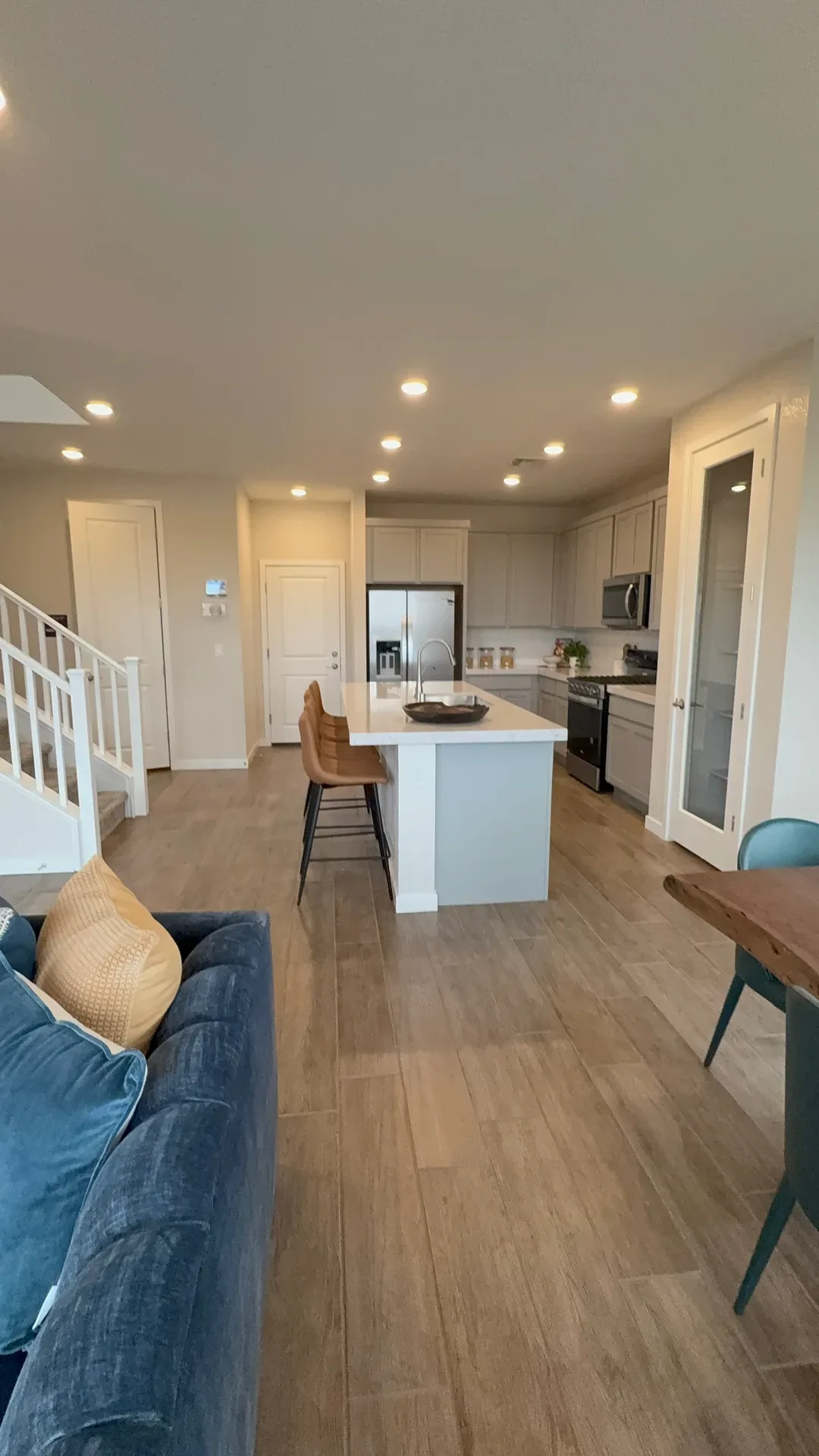
Yes, you can still close on a Las Vegas home by December 31, 2026, but the calendar is the boss: a financed purchase typically takes 30 to 45 days from accepted offer to keys, so the offers that close by year-end were written in November. This playbook walks through why the holiday window is one of the smartest times to buy, the exact Nevada timeline to close, the 2026 tax benefits of buying before January 1, and the ZIP codes worth searching right now.
Buyers are scarce between Thanksgiving and New Year's, and the ones touring are serious. Sellers who keep their homes on the market through December usually have a reason to move: a job transfer, a new home already under contract, or a goal of closing in the current tax year. Fewer competitors plus motivated sellers is why December has a reputation among agents as a quiet, negotiable month, even though the inventory on offer is thinner than it is in spring.
Why the Holiday Window Favors Buyers
The seasonal math is consistent year after year. Most buyers wait for spring, so the pool of active shoppers shrinks sharply in December, which means fewer competing offers and more room to negotiate price and terms. The sellers who are still listed are disproportionately motivated, often working against relocation, financial, or tax deadlines, and they tend to accept reasonable offers more readily. National transaction data has long shown that buyers pay below asking most often in the fourth quarter and early winter.
The honest trade-off is selection. December typically has the fewest listings of the year, so your pool of choices is smaller even as your negotiating position is stronger. For a buyer who knows their ZIP and their must-haves, that trade is usually worth it. For a buyer who wants to tour fifty homes, spring is the season.
The Real Timeline to Close in Nevada
Here is how the closing calendar actually works in Las Vegas. A financed purchase typically takes 30 to 45 days from acceptance to keys, and a cash purchase can close in as little as 7 to 14 days. The standard purchase agreement used by the Greater Las Vegas Association of REALTORS commonly provides 25 calendar days for your due diligence period, the window for inspections, appraisal, title review, and HOA records.
Two fixed deadlines protect you along the way. Your lender must deliver the Closing Disclosure at least three business days before closing, so you can review the final numbers, and Nevada sellers must deliver the Seller's Real Property Disclosure at least 10 days before close of escrow under state law. Escrow, the neutral process run by your title company that holds funds, clears title, prorates taxes, and records the deed, runs the full length of the contract.
Work backwards from December 31 and the timeline is unforgiving: at 30 to 45 days, a year-end close needs your offer accepted in the second half of November. If you are reading this closer to the holidays, target a January close instead. That is a completely normal outcome, and the tax logic below is worth understanding either way, because the value of buying well does not disappear when the calendar flips.
The 2026 Year-End Tax Benefits of Buying Now
Closing before December 31 puts several tax benefits on your 2026 return, filed in 2027. On a purchase that closes by year-end, you can typically deduct the mortgage interest actually paid from your closing date through December 31, the prorated property taxes you paid at closing (subject to the state and local tax cap), and mortgage points paid at closing. Points on a primary-home purchase mortgage that meet the IRS tests are fully deductible in the year paid, which is one reason buyers who can, choose to pay points in a closing year.
The mortgage interest deduction applies to interest on up to $750,000 of acquisition debt, and it only helps if you itemize on Schedule A. That matters because the 2026 standard deduction is $16,100 for single filers and $32,200 for married couples filing jointly, so some buyers no longer itemize. Property taxes count toward the state and local tax cap, which is $40,400 for most filers in 2026, notably higher than in recent years, and private mortgage insurance premiums are deductible again within income limits for 2026.
One important disclaimer, straight from me: I am a REALTOR, not a tax professional. These figures are the rules as commonly applied, but your deduction depends on your exact income, filing status, and loan details. Verify the numbers with your CPA or enrolled agent before you time a closing around a deduction, and never stretch your budget purely for a tax benefit that may not materialize.
What to Do This Week
If the year-end timeline appeals to you, the order of operations is simple and fast. First, get pre-approved, so your offer arrives with the financing attached; a pre-approval letter is what separates a serious buyer from a browser. Second, narrow your ZIP shortlist so touring stays efficient. Third, ask every seller for the things that improve your year-end math, seller concessions toward closing costs, a rate buydown, or a lease-back that gives the seller time while you get the keys.
If you want to close by December 31, do not spend this week only window shopping. The ZIP codes with the most consistent December activity in my world are Summerlin (89135, 89138), Henderson (89012, 89052), Mountain's Edge (89178), the Southwest (89148), and Aliante (89084). Search homes in your target ZIP on my Winning eXp portal and send me the ones that fit, and I will tell you honestly which have the room to negotiate this month.
Close the Year Strong
Let's end 2026 with your name on a deed.
I help buyers move on a deadline without moving recklessly: the pre-approval, the timeline to close, the negotiating room, and the honest read on every home we tour.