
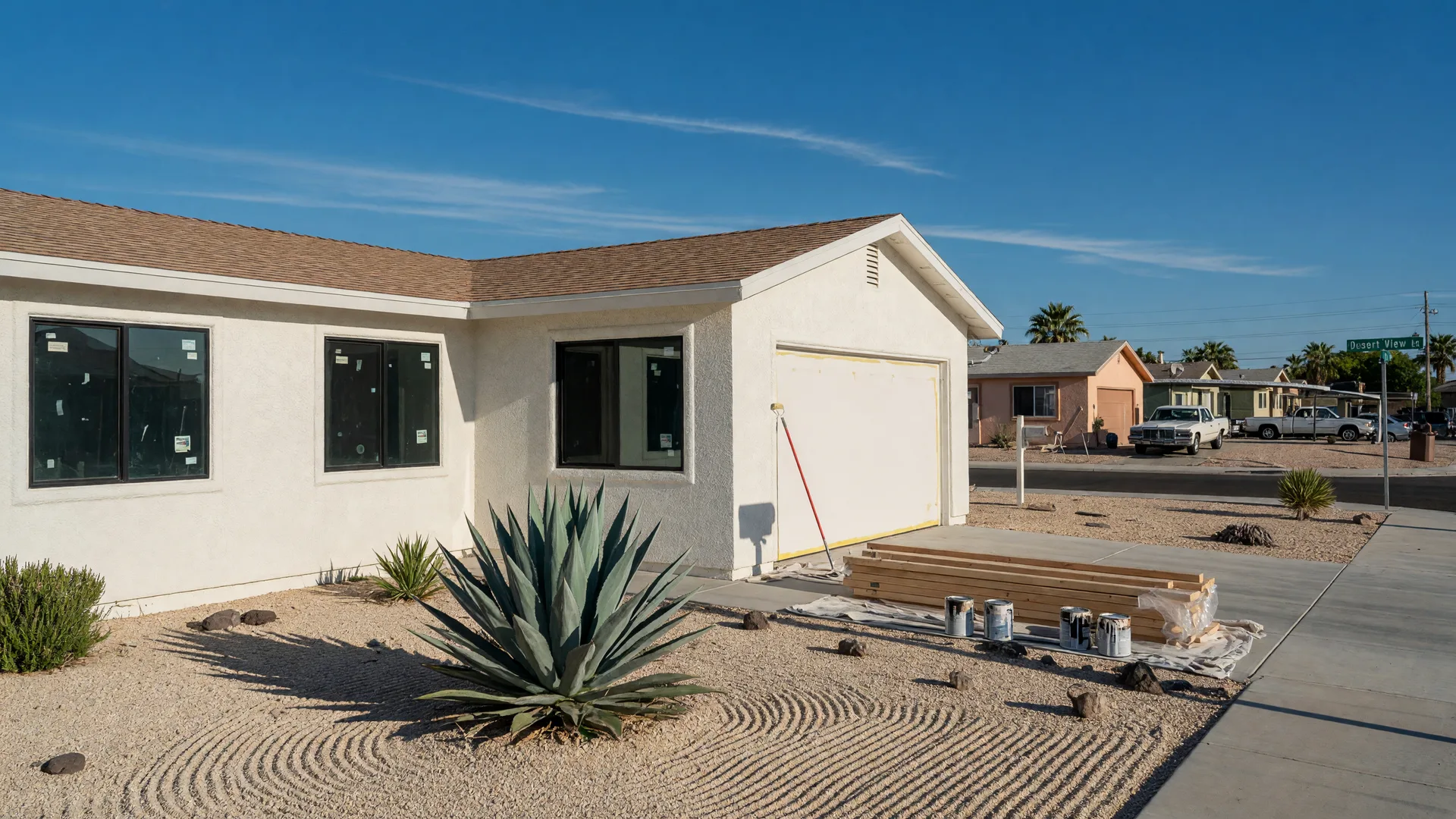
An FHA 203(k) is a renovation mortgage that lets you buy a home and pay for its repairs and updates with a single loan, so you finance the project rather than draining your savings after closing. For Las Vegas buyers, that can unlock older, original-condition homes across the valley that would otherwise sit out of reach. This guide explains the two versions of the 203(k), the down payment math, and where fixer-uppers with 203(k) potential are worth hunting for in 2026.
People often assume a dated home means a cash-heavy path: buy it cheap, then spend months saving for the kitchen. The 203(k) exists to break that assumption. It is one of the few mainstream loans built specifically for the buyer who wants to put sweat into place and price, but who does not have a second pile of cash waiting for the contractor.
What Exactly Is an FHA 203(k) Loan?
Think of a 203(k) as a purchase loan with a construction budget folded in. One mortgage covers the purchase price plus the estimated cost of approved repairs, you close once, and you make one monthly payment on the total. Your lender disburses renovation funds to licensed contractors in stages as the work is completed and inspected, so the money is protected on both sides. Your mortgage payment is based on the combined amount, and the home is appraised using its value after the work is done, known in the industry as the after-repair value.
That last part is the secret to why 203(k) buyers can be aggressive: the loan is sized against what the house will be worth, not just what it is worth today. FHA guidelines generally keep the loan within the lesser of 96.5% of the combined purchase-and-repair total or 110% of the after-repair value, so the financing follows the finish line, not the starting line.
Limited vs. Standard 203(k): Picking the Right Loan
FHA offers the 203(k) in two versions, and the choice comes down to the size and type of work.
The Limited 203(k), sometimes called the streamline version, covers minor, non-structural repairs and upgrades: new flooring, kitchen and bath refreshes that do not move walls, appliances, paint, and water-smart exterior updates. The repair budget cap is $75,000, which HUD raised from $35,000 in July 2024 and has kept in place since. It does not require a HUD consultant, and renovations generally must be finished within nine months. For the typical Las Vegas fixer-upper, the Limited version handles most kitchens, baths, and flooring projects comfortably.
The Standard 203(k) is for major work: structural rehabilitation, additions, and even demolition and rebuild. There is a minimum of $5,000 in repairs, no dollar cap beyond FHA's county loan limits, and a HUD-approved 203(k) consultant who oversees the plan and the disbursements. You get up to twelve months to finish. This is the version for the buyer taking a 1970s ranch down to the studs or putting on an addition.
The right choice depends on the house, not the dream. I have walked buyers through both, and the conversation usually starts with a contractor walking the property to separate cosmetic updates from structural surprises before we ever pick a loan version.
The Money Math: Down Payments and Rates
Because it is an FHA loan, the 203(k) keeps the entry bar low. With a credit score of 580 or higher you can put just 3.5% down on the total project cost. With a score between 500 and 579, FHA allows 10% down. The down payment is calculated on the combined purchase and renovation amount, not just the sale price, so on a $400,000 home with a $50,000 renovation, the 3.5% figure applies to the $450,000 project total.
Expect the pricing to run a touch above a garden-variety FHA purchase loan, because the lender is managing an extra layer of renovation administration, and budget for the mortgage insurance premium that comes with any FHA loan. The trade is real, but for many buyers it beats a second loan or months of cash savings.
One question I hear constantly is whether down payment assistance can stack with a 203(k). The short answer: sometimes yes. FHA allows gifts and secondary financing from approved sources toward that 3.5%, and Nevada has programs like Home Is Possible, but each assistance program writes its own rules and some exclude renovation loans. That is exactly the kind of detail we verify with your lender before you start shopping, never after you have fallen for a house.
Where Fixer-Uppers Make Sense in the Las Vegas Valley
The obvious renovation targets are the valley's older, well-built neighborhoods where inventory leans original-condition. North Las Vegas has solid brick-and-ranch resales in 89031 and 89032 at prices that leave room to renovate. Henderson's older Green Valley pockets in 89014 and 89074 offer established streets, mature trees, and plenty of buy-fix-refinance history. In Las Vegas proper, parts of east and central Las Vegas in 89121 and 89104 hold original-owner homes from a few decades back, and downtown-adjacent enclaves near 89101 offer pre-war character for buyers who want something no new build can replicate.
The key is identifying the right bones and the right price gap. Search homes for sale across the Las Vegas Valley on my live portal, filter by ZIP and price, and flag the listings that have been sitting due to condition rather than location. Those are your 203(k) candidates.
From Showing to Keys: How a 203(k) Deal Actually Moves
- Line up your team first. You want a lender that closes 203(k) loans regularly and a licensed, insured contractor who will walk the property and produce real bids. Both before you shop.
- Shop with the project in mind. We look for homes where the price-to-value gap covers the renovation and leaves you equity on day one.
- Get the bids and the appraisal. The lender orders an appraisal based on the after-repair value, and your contractor's bid becomes part of the loan file.
- Close once, renovate in stages. After closing, the lender releases funds as work passes inspections, so you are never writing big checks out of pocket mid-project.
The honest trade-offs: escrow runs longer than a standard purchase because bids and the renovation plan must be finalized, and you need patience for construction timelines in the desert heat. If you are ready for a project and priced-out of move-in condition, those trade-offs can buy you thousands in instant equity.
Is a 203(k) Right for You?
A 203(k) rewards the buyer who has time, flexibility, and a clear vision of the finish line. It is a wonderful tool for first-time buyers who want to turn a dated home into their dream home without a second mortgage, and for investors who want one loan doing the heavy lifting. It is probably not right if you need to move in next week or if the thought of contractor schedules sends you running, and in those cases a home that needs only cosmetic touches you can pay for in cash is the more honest fit.
The best first step is not a loan application; it is a conversation about whether the fixer path fits your life. Search current listings in the valley, pull the three or four dated-but-diamond properties that interest you, and we will walk them together and talk through the real numbers, contractor included.
Considering a Fixer-Upper?
Let me help you run the real numbers.
A renovation loan only works when the numbers line up, and I can connect you with lenders who close 203(k) loans every month plus contractors who know Las Vegas construction. Tell me about the home you are eyeing.