
One of the most important conversations I have with new homeowners in the Las Vegas Valley is about something that has nothing to do with their mortgage payment or their interest rate. It is about how to take care of the home they have worked so hard to buy.
Living in the Mojave Desert is different from owning a home almost anywhere else in the country. The extreme summer heat, the monsoon storms, the hard water that comes through every tap, and the expansive soil beneath your foundation all create a maintenance environment that is uniquely Southern Nevada. Understanding these conditions and staying ahead of them can save you thousands of dollars in repairs and preserve the value of your most important investment.
Here is your year-round guide to protecting your Las Vegas home through every season.
Spring: Pre-Heat Prep (March through May)
Spring in Las Vegas is brief and beautiful, with daytime temperatures in the 70s and 80s. It is also your last chance to get your home ready before the summer heat arrives. Use this window wisely.
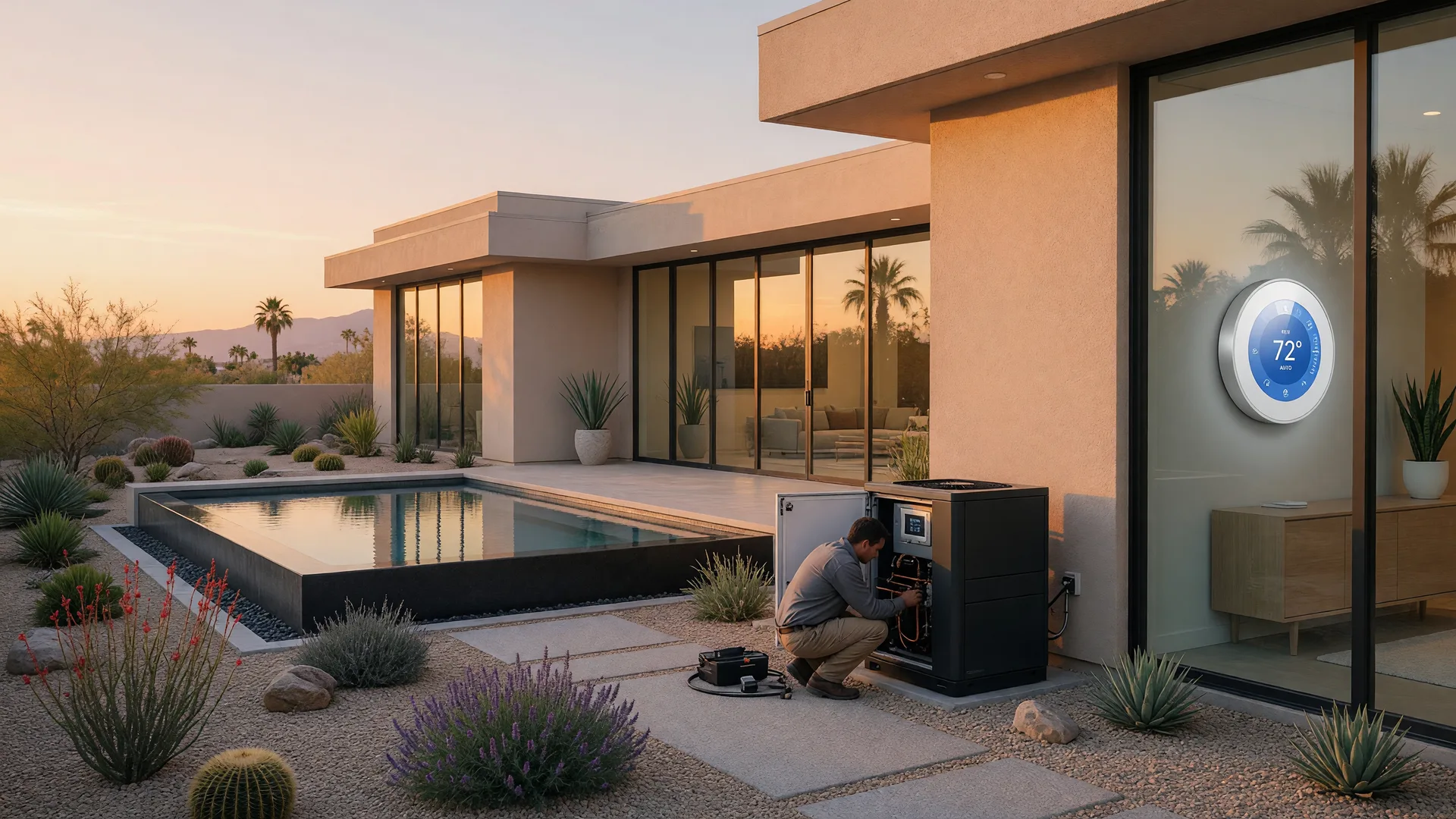
- Schedule your HVAC tune-up. Your air conditioner is about to run for months straight in 115-degree heat. A professional inspection before summer hits can catch refrigerant leaks, worn capacitors, and dirty coils that would otherwise fail mid-July when every service company in the valley is booked solid for weeks.
- Replace your air filters. Desert dust and fine caliche particles clog HVAC filters two to three times faster than in milder climates. Set a monthly reminder on your phone and keep a stash of filters in your garage so there is no excuse to skip it.
- Inspect your roof. UV exposure in the Mojave is brutal on roofing materials. Walk your roof or hire an inspector to look for cracked or loose tiles, degraded caulking around flashings, and lifted ridge caps. Blistered asphalt shingles and hairline stucco cracks let water in during monsoon season, and what starts as a small leak can become a major interior repair.
- Flush your water heater. Las Vegas water measures 16 to 22 grains per gallon of hardness, among the hardest in the country. Sediment builds up at the bottom of your water heater tank every year, reducing efficiency and shortening its lifespan. A spring flush is a simple job that adds years to your unit.
Summer: Peak Heat Management (June through August)
Summer in Las Vegas is relentless. Attics regularly reach 150 to 160 degrees Fahrenheit. Your air conditioner becomes the most important appliance in your home, and your water bill climbs as your landscaping fights to survive. Here is how to keep everything running smoothly.
- Monitor your AC performance. If your system is running longer than normal to maintain temperature, or if you notice warm air from the vents, call a professional immediately. Check your condensate drain line for clogs. A clogged line in summer causes water backup that can damage your ceiling and walls, often at the worst possible time.
- Check your irrigation system. Monsoon storms aside, Las Vegas receives under four inches of rain per year. Your landscaping depends entirely on your irrigation system. Walk your drip lines and sprinklers once a month to catch broken heads, clogged emitters, and leaks before they kill your plants or run up your water bill.
- Inspect your foundation perimeter. Extreme summer heat causes the expansive clay soils common across the valley to dry and shrink. That movement can create new cracks in walls, sticking doors, and uneven floors. Walk your home's perimeter monthly and note any changes. Early detection makes foundation repair far less invasive and less expensive.
Monsoon Season: July through September
Monsoon season is the most unpredictable period for Las Vegas homeowners. Sudden downpours with 60-plus-mile-per-hour winds find every weak point on a home. Driving rain combined with the UV damage your roof accumulated all summer is a recipe for leaks.
After every significant storm, do a quick walk-around. Look for displaced roof tiles, standing water near your foundation, and debris that may have clogged your drains. Clean your gutters and downspouts even though it is the desert. A single monsoon downpour can dump more water in an hour than the area typically receives in a month, and poor drainage channels that water straight toward your foundation. Water intrusion remediation can cost eight thousand dollars or more if you catch it late.
Fall: Recovery and Winter Prep (October through December)
As the desert cools, fall offers a second window for maintenance tasks that are harder to do in the intense summer heat. This is the time to evaluate how your home performed during the hottest months and prepare for the brief but real winter cold.
- Post-monsoon roof inspection. Have a roofing professional check for damage from summer storms. Small issues caught in October are much cheaper to fix than emergency repairs come January.
- Test your heating system. Las Vegas winter nights can drop to 25 degrees. Turn on your furnace or heat pump in October to make sure it works before you actually need it. Replace your batteries in carbon monoxide detectors while you are at it.
- Insulate exposed pipes. Freeze damage to outdoor plumbing is one of the most common winter claims in Las Vegas. Wrap exposed pipes in unconditioned spaces, including hose bibs, with foam insulation sleeves from any hardware store.
- Refresh your landscaping. Fall is the best time to prune frost-sensitive plants and refresh mulch before winter. Cut back spent perennials and set your irrigation controller to account for the reduced water needs of cooler months.
Winter: Protect and Preserve (January through February)
Winter is the slow season for Las Vegas home maintenance, but there are still a few important items to keep on your radar. January freeze events are rare but real. Older homes with galvanized pipes face higher risks, and even newer builds can experience slab leaks when the ground shifts during cold snaps.
Use these cooler months to replace your water heater's anode rod if it has been more than three years. This small maintenance step dramatically extends the life of your water heater by preventing internal corrosion, and it costs about 40 dollars and 20 minutes of your time.
If you own a pool, winter is also a good time to check your equipment. Las Vegas pools run year-round thanks to our mild climate, but colder water reduces chemical efficiency. Test your water chemistry weekly and keep your pump running to prevent algae growth.
How Maintenance Protects Your Home Equity
Every dollar you put into preventive maintenance protects your home's value and your equity. A well-maintained home in Summerlin, Henderson, or Mountain's Edge not only holds its value better, it sells faster and at a higher price when the time comes. Buyers notice deferred maintenance, and they factor it into every offer they make.
Beyond the financial case, there is the peace of mind that comes from knowing your home is in good shape. Las Vegas is a city of extremes, and the homes here ask more of their owners than homes in milder climates. But the reward is a beautiful place to live in one of the most dynamic and growing regions in the country. Staying on top of maintenance is how you keep enjoying that reward without unexpected surprises.
One last thing. If you are thinking about buying or selling in the coming year, I recommend looking at a home's maintenance history the same way you look at its price and location. A home with documented seasonal maintenance is a home that has been cared for. If you are selling, having a file folder of receipts and service records is one of the most persuasive things you can show a buyer. It tells them your home has been protected.
Maintenance needs vary by home age and location, so it helps to browse by ZIP: Summerlin (89135, 89138, 89144), Henderson (89002, 89012, 89014, 89015, 89044, 89052, 89074), and Mountain's Edge (89178) each have their own housing stock. See what is on the market on my live search: Search homes in the Las Vegas Valley.
Thinking About Buying or Selling Your Las Vegas Home?
Whether you are buying your first home in the valley and want to understand what maintenance looks like, or you are selling and need guidance on how to present your home's best story, I can help. Let us talk about your goals and build a plan that works for you.