
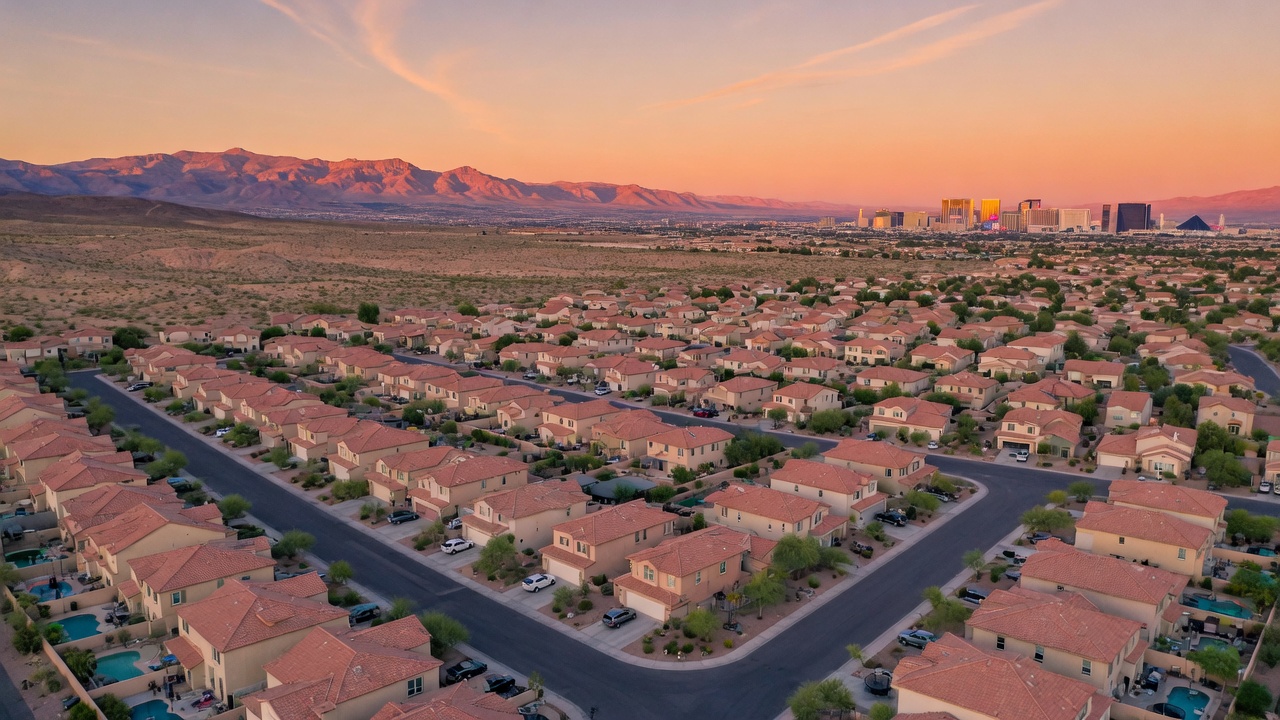
The Las Vegas Valley real estate market just delivered a headline that matters: according to the latest data from Las Vegas REALTORS (LVR), the median price of an existing single-family home hit $490,000 in May 2026 — an all-time record for the valley. That number represents a 2.6 percent increase over May 2025 and marks a decisive rebound after the softness we saw in late 2025 and early 2026.
But a record-high median price does not tell the whole story. As with any market data, the real value is in what lies beneath the headline — and that is where the actionable insights live. Let me break down what the latest numbers actually mean, and how to position yourself whether you are buying, selling, or simply watching.
The Record: What Drove the $490,000 Median
The $490,000 median reflects completed transactions on previously owned single-family homes in May 2026. Several forces are converging to push prices to this level:
Seasonal demand is real. The spring selling season in Las Vegas typically runs from late February through June, and May is historically one of the strongest months for closed transactions. Families want to be settled before the school year starts, and relocators — particularly those from California and the Pacific Northwest — time their moves to align with summer.
New construction pricing is pulling the median upward. Summerlin's 11 new neighborhoods, Henderson's continued expansion, and new builds in the southwest corridor are all listing at premium prices that push the overall median higher. When a significant share of monthly closings includes new-construction homes priced well above the resale average, the median moves up even if resale prices are relatively flat.
Inventory is up, but selectively. While 6,784 active single-family listings without offers represents a 2.1 percent year-over-year increase, that inventory is not evenly distributed. Premium neighborhoods in Summerlin and Henderson remain competitive, while some outlying areas and the condo/townhome segment have more available supply. The imbalance means that well-priced homes in desirable areas still attract multiple offers, while overpriced listings sit.
What 3.5 Months of Supply Actually Means
In real estate economics, six months of supply is generally considered a balanced market. Below four months favors sellers. Above seven months favors buyers. At 3.5-plus months, the Las Vegas Valley is still technically in seller-favorable territory, but just barely — and the trend is moving toward balance.
For context: in the peak frenzy of 2021 and early 2022, inventory dropped below two months in some months. We have nearly doubled that level since then. The condo and townhome segment is even more buyer-friendly, with 2,639 active listings representing a 5.1 percent year-over-year increase.
What this means for buyers: You have more choices than you have had in years, and the urgency that defined the 2021-2023 market has faded. You can tour multiple homes, compare neighborhoods, and negotiate on price and terms. But do not mistake a balanced market for a soft one. Prices are at record highs, mortgage rates are holding in the 6.5 percent range, and the best homes in the best locations are still moving quickly. Preparation — pre-approval, clear budget, decisive action — still separates successful buyers from frustrated ones.
What this means for sellers: A record-high median is good news, but it does not mean you can price on wishful thinking. The market is rewarding accuracy. Homes priced within 2 to 3 percent of comparable sales are selling. Homes priced above market are sitting, and many are eventually reducing. One in three active listings has already undergone at least one price cut. The sellers who win in this market are the ones who invest in presentation — professional photography, staging, clean and move-in-ready condition — and price competitively from day one.
Neighborhood-Level Reality: The Median Is an Average, Not a Guarantee
One of the most important things I tell my clients is that valley-wide median prices are useful for tracking trends, but they do not predict what your specific home is worth or what you will pay in your target neighborhood. The Las Vegas Valley is a patchwork of micro-markets, and the variation is dramatic:
- Summerlin: The valley's strongest pricing continues, with median single-family values ranging from $760,000 to $810,000 depending on the village. New construction in Summerlin West — including Grand Park Village and Esplanade at Red Rock — is drawing national relocators and commanding premium prices.
- Henderson: Holding steady in the $559,000 to $645,000 range. Green Valley and Cadence remain among the most searched communities in the valley. The Water Street District revitalization and the $2.5 billion development surge are adding long-term value to the area.
- Mountain's Edge & Southwest Las Vegas: A strong entry point for first-time buyers and growing families. Parks, trails, and proximity to the southwest corridor make it competitive. New construction continues to expand the community's footprint.
- North Las Vegas / Aliante: The valley's affordability leader at $370,000 to $385,000. New residential development near Alta Drive is adding 400-plus acres, and rental demand remains strong for investors.
- Condos & Townhomes Valley-Wide: This segment is still working through its correction, with prices retreating to roughly $285,000 — a decline of 5 to 9 percent in some submarkets. For buyers open to attached housing, this is creating genuine value.
Mortgage Rates: Stable but Not Cheap
The 30-year fixed mortgage rate is hovering between 6.5 and 6.6 percent as of mid-June 2026, according to Bankrate and Forbes data. That is slightly higher than where we were in early spring, and it reflects the reality that inflation remains persistent and the Federal Reserve has not signaled imminent rate cuts.
Most industry forecasts now project rates will remain in the 6.0 to 6.6 percent range through the remainder of 2026. For buyers doing the math: a $450,000 home at 6.5 percent results in roughly $2,845 per month in principal and interest. That is meaningful, and it underscores the importance of getting the best rate possible through shopping lenders, considering buydown options, and maintaining strong credit.
The point I always make to my clients: do not let the rate be the reason you freeze. If you find the right home at a price your budget supports, the rate is one factor among many — and rates can be refinanced later. What you cannot refinance is a purchase price that was too high or a home that was wrong for your needs.
Sales Volume: Flat but Stable
Total existing home sales — including single-family, condos, and townhomes — came in at 2,575 closed transactions in May 2026, down just 1.0 percent from May 2025. That is essentially flat, and it reflects a market where buyers are active but deliberate. The frenzy of over-asking offers and waived inspections is behind us. In its place is a more methodical market where buyers are taking time to evaluate, negotiate, and make informed decisions.
For sellers, this means patience. Homes are selling, but the average marketing timeline is stretching to 30 to 45 days in most neighborhoods, compared to the 14-to-21-day cycles we saw during the peak. That is not a problem — it is normal. But it requires realistic expectations and a marketing strategy that gives your home maximum exposure from the start.
What I Am Telling My Clients Right Now
If you are a buyer: The record-high median is not a reason to panic — it is a signal that the market has found its floor and is climbing again. Inventory is healthier than it has been in years, which means you have options. But prices are unlikely to drop significantly in desirable neighborhoods. Get pre-approved, define your non-negotiables, and be ready to act when you find the right home. I have seen too many buyers lose homes they loved because they were waiting for a rate drop that never came.
If you are a seller: The data is on your side — prices are at all-time highs, and demand is steady. But the market is rewarding sellers who treat the process professionally. Price it right. Stage it well. Market it aggressively. Be responsive to offers and open to negotiation. The sellers who do this are achieving strong outcomes. The ones who overprice and wait are watching their days-on-market climb while their neighbors sell.
If you are a homeowner doing nothing: Congratulations — your home just appreciated in value. Use this time to review your equity position, understand what your home is worth in today's market, and think about your long-term financial goals. Homeownership is the most powerful wealth-building tool most Americans have access to, and the equity you are building right now is real, tangible, and compounding.
The Bottom Line
The Las Vegas Valley real estate market in mid-2026 is a study in contrasts: record-high prices alongside rising inventory, steady demand alongside more deliberate buyers, and mortgage rates that are stable but not falling. It is a market that rewards preparation, knowledge, and honest guidance — and it punishes guesswork and wishful thinking.
Whether you are thinking about buying your first home, selling a property you have owned for years, or simply want to understand what your home is worth in today's market, I would love to sit down with you, walk through the real numbers for your specific neighborhood, and build a plan that fits your goals. No pressure, no gimmicks — just honest data and a strategy built around what matters to you. Let us make sure your next move is the right one.
Record prices look different block to block, so ZIP codes are your friend: Summerlin (89135, 89138, 89144), Henderson (89002, 89012, 89014, 89015, 89044, 89052, 89074), Mountain's Edge (89178), and Aliante (89084). See what is actually on the market right now on my live search: Search homes in the Las Vegas Valley.
Let me show you what these numbers mean for your home.
I track neighborhood-level data across the Las Vegas Valley every week. Whether you are curious about your home's current value, thinking about selling, or ready to make a purchase, I will give you an honest, data-driven assessment. No pressure — just clarity.