
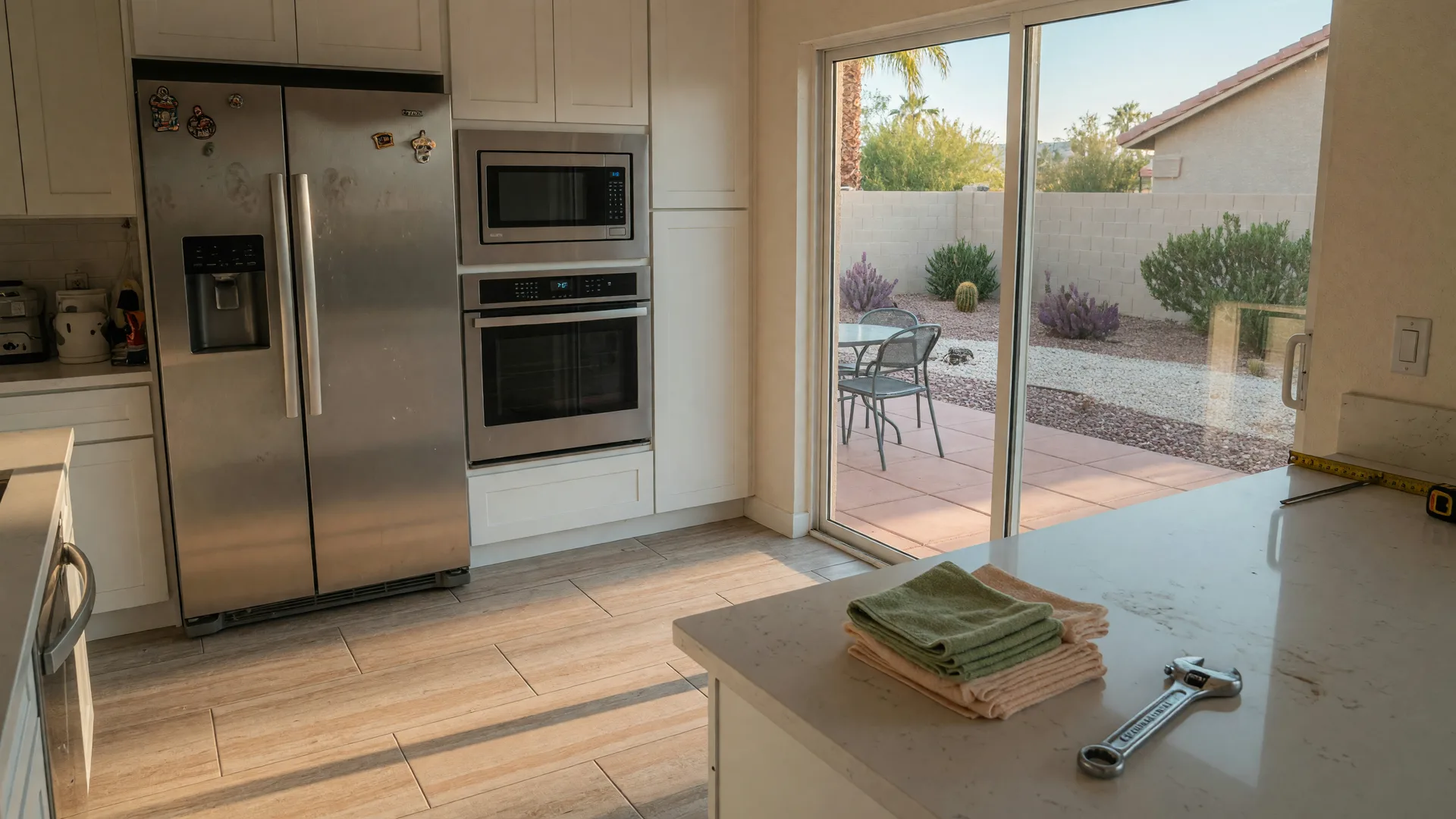
A home warranty is a service contract that covers the repair or replacement of major home systems and appliances when they fail from normal wear and tear. It is not homeowners insurance, and understanding the difference is the first step to deciding whether one belongs in your deal. This guide explains what a home warranty actually covers, what it costs, what is usually excluded, and when it genuinely makes sense for Las Vegas buyers and sellers.
I get asked about home warranties constantly, and my answer is always the same: it depends on the home, the systems, and the people involved. Let us walk through the real math so you can decide with your eyes open, instead of buying one out of vague anxiety or skipping one out of a hunch.
What a Home Warranty Is, and What It Is Not
Homeowners insurance protects you against sudden, catastrophic events: a fire, wind damage, a burst pipe. A home warranty does the opposite job. It is a service contract, typically written for one year and renewable, that responds to breakdowns from everyday use. When your furnace stops heating in January or your dishwasher quits mid-cycle, the warranty company arranges a contractor and pays for the covered repair or replacement, minus your service call fee.
The two products work together, not instead of each other. In the Las Vegas Valley, where summer stretches from May to October, the system most homeowners worry about is the air conditioning. A 12-year-old AC unit in Summerlin (89135) or the Northwest Valley (89131) runs hard for half the year, and that is exactly the kind of wear-and-tear scenario a warranty is designed to address.
What Does It Cost?
Annual premiums typically run from about $350 to $900 depending on the plan, the coverage level, and where you live. On top of that, every service call carries a per-visit fee, usually $50 to $150, which is the home warranty version of a deductible. That fee is due each time a technician comes out, even if the diagnosis turns out to be something the plan does not cover.
That cost structure matters more than people expect. If your AC needs three separate visits in one summer, you are paying that fee three times. Many plans also carry per-system caps, often in the $1,500 to $3,000 range, so on the big-ticket items, the plan covers its share up to a limit and you cover the rest. Reading those numbers before you buy is how you avoid the most common warranty complaint: a claim that was covered in the brochure but capped in the fine print.
Covered, Excluded, and the Fine Print
Standard plans cover the major systems: HVAC, plumbing, electrical, and the water heater, plus kitchen appliances like the refrigerator, oven, range, and dishwasher, and often the washer and dryer. Optional add-ons extend coverage to things like the pool or spa equipment, which is a popular upgrade for Henderson (89052) and Mountain's Edge (89178) homes with backyard pools.
The exclusions list is where careful buyers read twice. Most plans exclude pre-existing conditions, improper installation, lack of maintenance, cosmetic damage, pests, and acts of nature. They also typically exclude secondary damage: if a leaking water heater ruins the flooring, the plan may cover the water heater but not the floor. Items still under the manufacturer's warranty are excluded too, and the warranty company, not you, chooses the contractor who comes out.
None of this is a reason to avoid a warranty. It is a reason to read the actual contract before you pay for one, since plans vary a great deal company to company, and to know that the warranty company is a claims administrator, not a repair shop with your best interests at heart.
When Sellers Pay, and Why
In most Las Vegas transactions, when a home warranty appears, the seller pays for the first year as an incentive. There is no Nevada law requiring it; it is purely a negotiation item. Sellers offer one to make a listing more attractive, ease a buyer's worry about aging systems, smooth over a minor inspection finding, and avoid the post-closing phone call when the water heater gives out three weeks after the keys change hands.
As a buyer, a seller-provided warranty is genuinely free insurance for your first year, and I would never tell you to refuse it. The calculus changes if you are being asked to pay for the coverage yourself. Then the honest question is: how old are the systems, how comfortable are you with a $200 service bill, and could that $500 premium sit better in your repair savings instead?
When It Makes Sense, and When to Skip It
A home warranty makes the most sense for an older home with aging systems, especially if you are a first-time buyer who prefers predictable bills over surprise invoices. If the home you are buying has a 15-year-old AC in Aliante (89084) or a 20-year-old water heater in Henderson (89002), a first-year warranty can genuinely pay for itself the first time the heat stops working in August.
It makes far less sense for a newer home whose builder warranty is still active, or for a home where the inspection shows fresh systems with years of life left. Consumer and industry reviews of warranty claims are mixed, and many advisors are blunt that the plans rarely pay out more than they collect. The counterweight is the peace of mind, which is worth something real for a family making their largest purchase ever.
My usual guidance: take a seller-paid warranty gratefully, read the contract, and budget the service call fees. If you are buying the warranty yourself, ask your agent to help you pull the inspection report's system ages first. A warranty is a bet on breakdowns, and the inspection tells you how good the odds are.
Questions to Ask Before You Buy
If a warranty is on the table, ask these questions before anyone writes a check. What is the exact service call fee, and does it vary by trade? What are the dollar caps on HVAC, plumbing, and appliances? How long does a typical claim take from phone call to repair? Do I get any choice in the contractor, or does the company assign one? What happens if a covered item cannot be repaired, does the plan replace it with an equivalent or pay out a depreciated amount? And can I cancel for a prorated refund if I sell before the year ends?
None of these questions are hostile. They are exactly the questions a financially literate homeowner asks about any contract, and the answers separate a solid plan from a marketing product.
The right home is more than the systems inside it, and the right deal includes honest advice about what you are really buying. If you are weighing homes across the valley, use my branded search portal to browse current listings in every community I serve, from Summerlin (89135) and the Northwest Valley (89131) to Mountain's Edge (89178), Henderson (89052), and Aliante (89084). When we tour together, I will point out the age of the AC, the water heater, and the roof on every property, because the systems you cannot see are what the warranty conversation is really about.
Whether the warranty is a bargain or a waste depends on the house and the homeowner. My job is to make sure you know which one you are buying before you sign for it.
Buy With Your Eyes Open
Let's inspect the whole deal, systems included.
I will walk you through the inspection report system by system, help you negotiate the warranty, repairs, and credits that matter, and make sure you know exactly what your contract covers before you close.