
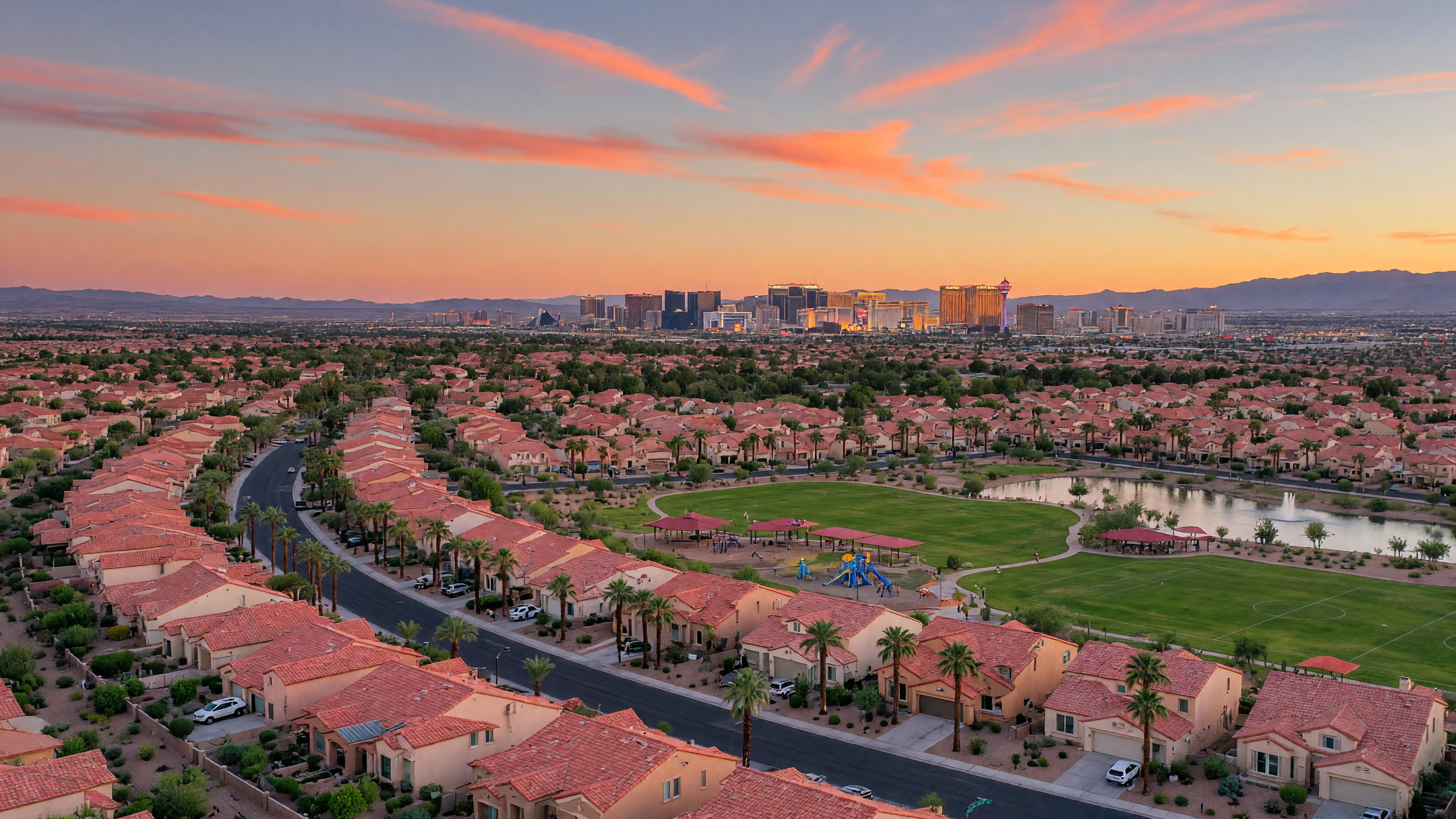
For the past two years, I have been telling clients the same thing: we are in a market that is slowly, steadily transitioning. Not crashing, not booming — transitioning. And as we head into July 2026, the data is now clear enough to say with confidence that the Las Vegas Valley has shifted from a strong seller's market to a genuinely balanced one, with pockets that are tipping in favor of buyers for the first time since 2019.
That shift is real. It is measurable. And it has a shelf life. In this check-in, I want to walk you through the latest numbers, explain what is driving the change, and help you understand how long this window of opportunity is likely to last.
The Inventory Story: More Homes, More Leverage
The single biggest factor reshaping the Las Vegas market right now is inventory. Clark County is carrying approximately 5,600 active single-family listings, which translates to about 2.6 months of supply. That is up from roughly 1.6 months a year ago — a 60 percent increase in available homes.
To put that in perspective, during the peak frenzy of 2021 and early 2022, inventory fell below one month. Buyers were competing in bidding wars, waiving inspections, and offering tens of thousands above asking price. That world is gone. Today, buyers have more choices, more time, and more negotiating room than they have had in years.
The data backs this up: approximately one-third of active listings have undergone at least one price reduction. That is a significant number, and it tells you that the market is self-correcting in real time. Sellers who overprice are being forced to adjust, and buyers who are well-prepared and patient are finding genuine opportunities.
- Buyers: You can tour multiple homes without pressure. You can negotiate on price, repairs, and contingencies. You are no longer in a situation where you must make a split-second decision or lose the house.
- Sellers: Pricing accurately from day one is more important than ever. Homes priced within 2 to 3 percent of comparable sales still sell in under 30 days. Homes priced above market sit, accumulate days, and eventually need reductions that signal weakness.
- Homeowners: Your equity is still growing — a home purchased at the 2020 median of roughly $330,000 is now worth approximately $472,000. But the pace of appreciation is normalizing, so do not expect the double-digit gains of the pandemic era to repeat.
Mortgage Rates: The Most Encouraging Trend of 2026
If there is one piece of good news that every buyer and homeowner can appreciate, it is where mortgage rates have landed. The 30-year fixed rate in Nevada is currently hovering between 6.3 and 6.8 percent, with most lenders quoting around 6.5 to 6.6 percent for well-qualified borrowers. That is down from the 6.87 to 7.16 percent peaks we saw in March of this year.
The decline is modest, but it is meaningful in real dollars. On a $400,000 loan, the difference between 6.9 percent and 6.5 percent is roughly $95 per month — over $1,100 per year. More importantly, the trajectory matters. Rates are trending downward, not upward, and most industry analysts project they will remain in the 6.0 to 6.5 percent range through the end of 2026.
The Federal Open Market Committee held rates steady at its June meeting, but market-implied probabilities for a quarter-point cut later this year are rising. If the Fed does cut in late 2026, mortgage rates could dip toward 6.0 percent or slightly below. That would be the most favorable rate environment since 2022, and it would likely trigger a surge of buyer activity.
The Real Math on Rates vs. Prices
Here is the calculation I walk through with every buyer who asks whether they should wait for rates to drop further:
- Buy today at 6.5%: A $450,000 home with 20% down ($360K loan) costs approximately $2,275 per month in principal and interest.
- Wait 12 months for rates to hit 5.8%: If prices appreciate just 3% (consistent with 2026 trends), that same home costs $463,500. Your payment at the lower rate is roughly $2,710 per month — less savings than you might expect.
- The result: You saved money on the rate, but you paid $13,500 more for the home. It takes over 10 years of monthly savings to recoup the higher purchase price. Plus, you missed a year of equity growth.
The takeaway is not that rates do not matter — they absolutely do. The takeaway is that timing the market is a guessing game, and the cost of guessing wrong often exceeds the benefit of guessing right. The smartest strategy is to buy when you find the right home at a price your budget supports, and refinance later if rates improve.
Price Growth: Healthy, Not Explosive
The median single-family sale price in the Las Vegas metro area is approximately $472,000 as of June 2026, up 5.5 percent year-over-year from June 2025. That is solid, sustainable appreciation — the kind that builds equity without creating bubble conditions.
But as I always emphasize, the valley-wide median is an average, and averages hide variation. The reality at the neighborhood level is more nuanced:
- Summerlin continues to lead with median prices between $533,000 and $810,000 depending on the village. New construction in Summerlin West is drawing national relocators and luxury buyers, keeping premium pricing strong.
- Henderson holds steady in the $559,000 to $645,000 range, driven by demand in Green Valley, Cadence, and Inspirada. The city's $2.5 billion investment wave — including the Four Seasons and M Resort expansion — continues to support long-term appreciation.
- Mountain's Edge and the Southwest offer strong value for families, with entry points below the valley median and new construction adding inventory.
- Aliante and North Las Vegas remain the affordability anchor at $370,000 to $385,000. New development near Alta Drive is expanding housing options, and strong rental demand makes this area attractive for investors.
- Skye Canyon and the Northwest are standout performers with approximately 8 percent year-over-year price growth, driven by newer construction and outdoor-oriented lifestyle appeal.
Is the Buyer-Friendly Window Real — and How Long Will It Last?
Yes, the shift is real. But it is not permanent. Here is why I believe the current window of opportunity has a limited duration:
- Seasonal patterns favor action now. Inventory typically peaks in July and August and tapers in the fall. Buyers who wait until November will find fewer options and potentially face competition from buyers who were sidelined during the summer heat.
- A Fed rate cut would change the calculus fast. If the Federal Reserve cuts rates in late 2026 and mortgage rates dip toward 6.0 percent, expect a surge of buyer activity that could quickly tighten inventory and push prices upward. The most favorable buying conditions often coincide with the period just before rates drop — when inventory is high but competition has not yet returned.
- Structural demand remains strong. Las Vegas continues to attract relocators from California and other high-cost states, drawn by no state income tax, job growth, and relative affordability. That in-migration creates a floor under housing demand that limits how far prices can correct.
- New construction may slow. Tariff uncertainty and construction cost pressures could slow the pipeline of new homes, which would reduce the supply additions that are currently helping to balance the market.
In practical terms, I believe the most buyer-friendly window in the Las Vegas market is right now through the end of Q3 2026 — roughly the next three months. After that, seasonal inventory declines and the potential for a Fed rate cut to reignite buyer competition will likely shift the balance back.
What I Am Telling My Clients Right Now
If You Are a Buyer
- Get pre-approved now. With rates trending down but still elevated, knowing your exact budget before you tour homes saves time and strengthens your negotiating position.
- Use the inventory while it lasts. You have more choices than buyers have had in four years. Tour at least three to five homes before making an offer so you understand value in your target neighborhood.
- Negotiate with data. Use closed comparable sales — not list prices — to justify your offer. In a balanced market, well-supported offers get taken seriously.
- Consider new construction. Builders are offering rate buydowns, closing cost credits, and upgraded finishes. The incentive environment is genuinely favorable right now.
If You Are a Seller
- Price competitively from day one. The market will punish overpricing faster than it has in years. A home priced at or within 2 to 3 percent of comparable sales attracts immediate attention. A home priced above market sits and signals desperation.
- Invest in presentation. Professional photography, staging, and clean, well-maintained condition are table stakes in a balanced market. Buyers have options — your home needs to stand out.
- Expect a 30-to-45-day cycle. If your home does not receive showings in the first two weeks, something needs to change — pricing, photography, or strategy. Do not wait 60 days to adjust.
If You Are a Homeowner Not Planning to Sell
- Your equity is still growing. Even with the market normalizing, prices are up 5.5 percent year-over-year. A home purchased in 2020 at the valley median has gained roughly $142,000 in value.
- Review your equity options. If you have been considering renovations, a HELOC, or a cash-out refinance, the current rate environment and your accumulated equity may make this a good time to explore your options.
- Think about your next move. If you have been considering upgrading, downsizing, or investing in a second property, a balanced market with moderate appreciation is often the best time to make a strategic move — you are not selling at a peak, but you are not buying at one either.
Three Things I Am Watching Closely
- The Federal Reserve's July and September meetings. A rate cut in either meeting would be a catalyst for buyer activity. I am watching the CME FedWatch tool and mortgage rate locks daily for signals.
- New construction inventory levels. If builders continue to add supply at current rates, the balanced market dynamic holds. If construction slows due to costs or tariffs, existing home inventory becomes more valuable and price pressure increases.
- Seasonal inventory decline. History tells us inventory peaks in mid-summer and contracts through the fall and winter. If the decline is steeper than normal, the buyer-friendly window could close sooner than expected.
The Bottom Line
The Las Vegas Valley real estate market at the start of July 2026 is the most balanced it has been in years. Prices are appreciating at a healthy pace. Inventory gives buyers room to breathe. Mortgage rates are trending in the right direction. And the structural fundamentals — in-migration, job growth, no state income tax — continue to support long-term value.
But balanced markets do not last forever. Seasonal patterns, potential Fed action, and the ever-present demand from relocators mean that this window of opportunity will eventually narrow. If you have been thinking about buying, selling, or making a strategic move, the data says now is the time to have a serious conversation about your options.
I have been through enough market cycles to know that the best decisions come from understanding the real numbers — not reacting to headlines or emotions. Whether you want a full market briefing for your specific neighborhood or just have a few questions, I am here to help you make sense of it all. No pressure, no sales pitch — just honest, data-backed guidance so your next move is the right one.
If you want to see the neighborhood-level truth behind these numbers, search with ZIP codes: Summerlin (89135, 89138, 89144), Henderson (89002, 89012, 89014, 89015, 89044, 89052, 89074), Mountain's Edge (89178), Aliante (89084), the Northwest (89129, 89130, 89131, 89149, 89166), and the Southwest (89139, 89141, 89148). Browse live listings in all of them here: Search homes in the Las Vegas Valley.
Let us look at the real numbers for your neighborhood.
Whether you are buying, selling, or just curious about your home's value in today's market, I will give you an honest, data-backed assessment. No pressure — just clarity and a strategy that makes sense for your goals.