
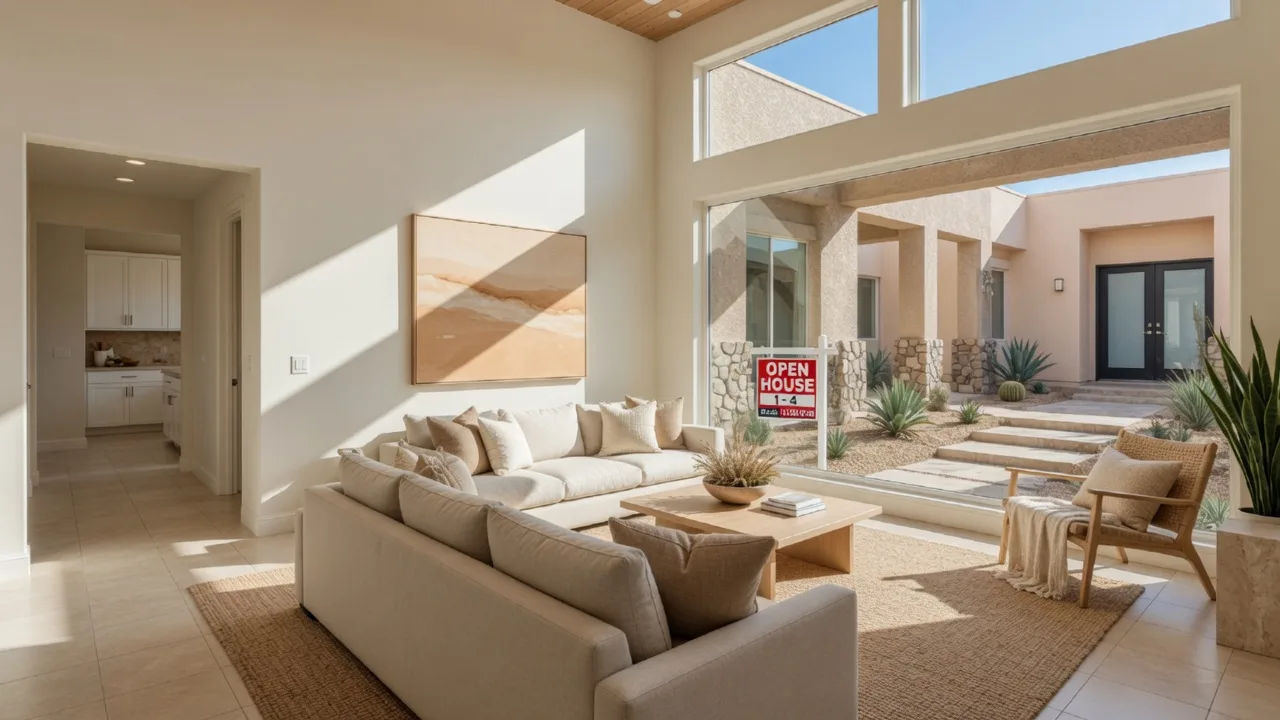
An open house is your best chance to read a home before you write an offer, and most first-time buyers walk through with their eyes on the staging and completely miss the things that matter. This checklist shows you what to inspect before you step inside, what to look for in every room, the Las Vegas desert-specific questions that really count, and the questions you should ask the listing agent while you are there.
I have toured hundreds of Las Vegas homes with buyers, in Summerlin, Henderson, Mountain's Edge, Aliante, and everywhere in between. The buyers who tour like a pro are the ones who later say their offer felt confident, because they already knew what they were buying. Here is exactly how to do it yourself.
Before You Walk In
The tour starts before the front door. Get your pre-approval in hand first, because sellers and agents take ready buyers seriously, and you should too. Then drive the neighborhood at different times of day: on a weekday commute, on a weekend afternoon, and once after dark. Traffic, noise, school pickup lines, and how the cul-de-sac feels at 9 p.m. are all things an open house will never show you.
Bring a small notebook or your phone's notes app, and write down your top five must-haves before you see the first house. That list is your anchor. Once you see three homes in a day, they blur together fast, and the buyers who write down what they saw make far better decisions than the ones who trust memory.
The Outside Check: Start with the Skin
Walk the exterior completely before you go in. Look at the roof from the street and from the back yard: missing tiles, sagging lines, and old-looking asphalt shingles are visible from the ground more often than you think. Check the stucco for cracks, especially around windows and doors, and look for the tell-tale white efflorescence streaks that hint at water behind the finish.
In the Las Vegas desert, two items deserve special attention. First, the air conditioning: find the condenser unit and note its brand and age. A system past ten years old works but may be near the end of its useful life, and a full replacement is a significant cost you want to know about before you negotiate, not after. Second, the grading: Las Vegas gets intense monsoon storms in summer, and the way the ground slopes around the foundation decides whether water runs away from the house or back toward it. Look for erosion channels and low spots along the slab.
If there is a pool, glance at the equipment pad: pump age, filter condition, and whether the plumbing looks neatly maintained. Pool equipment is one of the most common repair surprises in valley resales, and a quick look tells you a lot about how the current owners kept the house.
Inside: What to Actually Look At
Inside, the staging will draw your eye to the furniture, so deliberately look everywhere the staging is not. Check ceilings and the tops of walls for water stains, which in the desert most often trace back to roof leaks, AC condensation, or ice-maker lines. Look at windows for dual-pane labels and for fogging between the panes, a sign the seal has failed and the glass will need replacement.
In the kitchen and bathrooms, turn on the water and feel the pressure, then let it run while you look around. Open a few cabinet doors under the sinks and check for moisture, rust, or a musty smell. Find the water heater and note its age; roughly ten to twelve years is the typical service life, and the same math applies there as with the AC. Take a look at the electrical panel and note the brand and whether there is obvious space for expansion, which matters if you want a pool or EV charging later.
Then walk slowly through the main rooms with your eyes at floor level. Doors that stick, gaps under baseboards, and subtle dips in the floor can hint at foundation movement, which is worth noting and worth having a structural inspection confirm. None of this means the house is bad; the valley's clay soils shift and most houses show minor signs. You just want to know what you are buying and have the inspection budget in mind.
Desert-Specific Questions That Matter in Las Vegas
Beyond the basics, Las Vegas homes carry a few things you will not think to check in most other markets. Note which way the main living areas face: east-facing rooms get blasted with morning sun and west-facing rooms cook in the late afternoon, and that drives cooling bills more than you would expect. If the home has solar panels, ask whether they are owned or leased and ask to see the net metering paperwork; leased systems transfer differently in a sale. If the yard is xeriscaped, check whether the drip irrigation system works and whether the HOA has rules about what you can plant or replace. And if the home is a two-story, mentally triple the AC question: in the valley, a poorly insulated upstairs is the single fastest way to a painful summer electric bill.
Also ask about the HOA before you fall in love. Las Vegas is one of the most HOA-heavy markets in the country, and most master-planned communities in Summerlin (89135, 89138), Henderson (89074, 89052), Mountain's Edge (89178), and Aliante (89084) carry dues plus sometimes a special assessment. Dues and rules are exactly the kind of thing a listing agent can tell you on the spot, and exactly the kind of thing that changes whether a home fits your budget.
Questions to Ask the Listing Agent
The listing agent is paid by the seller, so treat them as a source of information, not advice. They can still answer the practical questions that shape your offer: how many days has the home been listed, has the price changed since it hit the market, why are the sellers moving, what do the HOA dues cover, and are there foreseeable special assessments.
Two more that buyers rarely ask: are the seller's disclosures available to read, and are there any known issues, from previous roof leaks to insurance claims, that I should know about? Good agents answer those directly, and direct answers tell you a lot about how the rest of the transaction will go.
After the Tour: Compare Fairly
When you get home, write down the top three things you loved and the top three that gave you pause, for every house. Then compare homes only against homes on the same footing: a newer two-story in 89178 and a 1990s single-story in 89074 will both be good buys for the right buyer, but they are not substitutes for each other, so do not torture yourself comparing them head to head.
The homes that become the right purchase are the ones that match your list, your budget, and your honest read of the inspection risk. When you have found that one, that is the moment to move, and that is the moment my buyers and I start building the offer together.
Tour Smarter, Then Let's Find Yours
The best way to practice this checklist is with a buyer's agent who will point out the things you missed and keep honest notes for you along the way. When you are ready, use my branded search portal to browse current Las Vegas listings across Summerlin, Henderson, Mountain's Edge, and Aliante, then bring your top picks to me and we will tour them together, checklist in hand.
I love the first-tour conversation, because it is where buyers learn what they actually want. Let us make your open house tours work for you, and get you from touring to closing with confidence.
Buy With Confidence
Touring is the fun part. The checklist is where I earn my keep.
Bring me your open house list and I will bring the honest answers: what to inspect, what to ask, and what each home is really worth before you write an offer.