
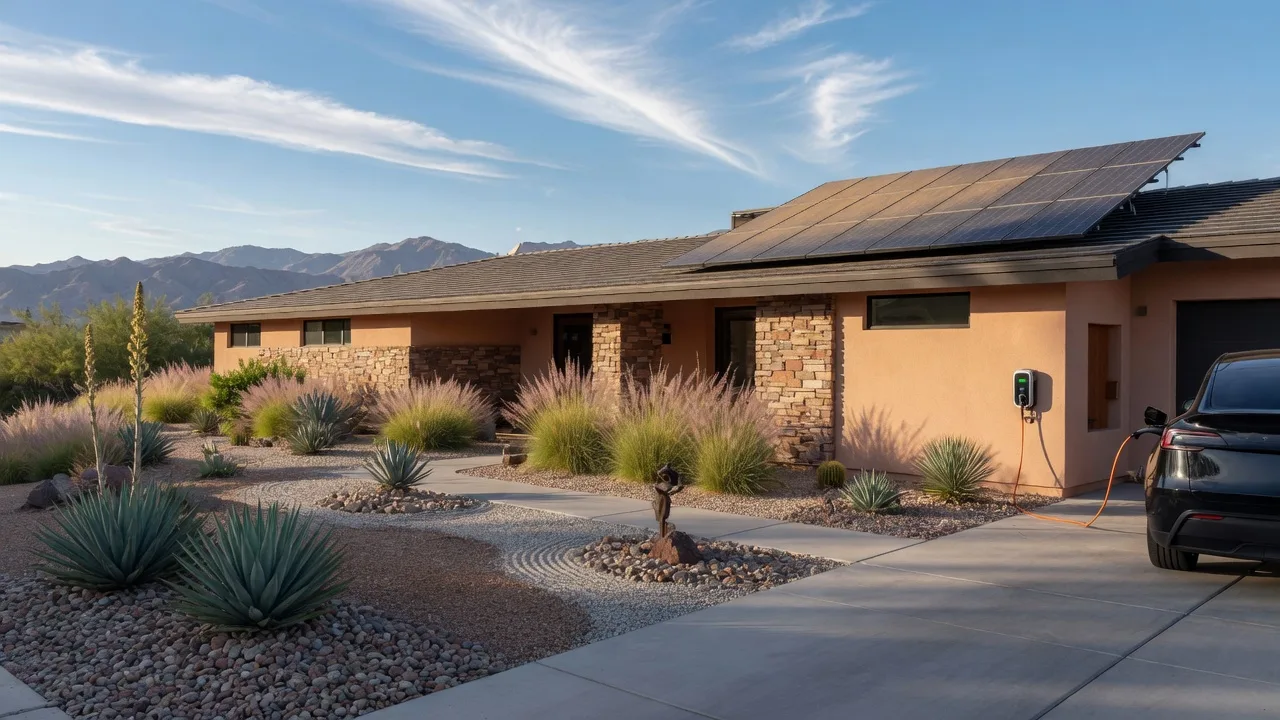
Rooftop solar and EV charging have become everyday questions for Las Vegas homebuyers and owners, and the rules changed in a big way this year. This guide covers what the desert sun means for your roof, the 2026 expiration of the federal solar tax credit, exactly how NV Energy net metering pays you, what a system actually costs, and how to shop a solar-ready home without getting burned.
I am not an installer and I will never pretend to be. My job is to make sure you understand the real numbers, ask the right questions, and never sign a solar or an EV lease that works better for the company than for your family. Let me give you the honest 2026 landscape.
The Desert Is Solar's Natural Home
Southern Nevada gets more than 300 sunny days a year, and the numbers show homeowners have noticed. Industry data from SEIA puts Nevada around sixth or seventh in the nation for total installed solar capacity, roughly 8.2 gigawatts, and solar supplies around a third of the state's electricity. One industry estimate says nearly 17% of Nevada homes already have rooftop solar. There is no climate in the country better suited to a south-facing roof.
That density matters for buyers because solar is now a normal feature of the local housing stock, not an exotic upgrade. A growing share of valley listings, especially newer homes in Summerlin, Henderson, and Mountain's Edge, come with panels already installed, which means the purchase decision includes evaluating someone else's system, and that takes a specific checklist.
The 2026 Change That Matters: The Federal Credit Is Gone
Here is the most important update of the year, and I want it in plain words: the 30% federal Residential Clean Energy Credit that powered the last solar boom has expired for new homeowner-owned systems placed in service after December 31, 2025. If you install panels today, in 2026, there is no federal tax credit waiting for you on next year's return. Systems that were installed and operational by the end of 2025 still qualify for the full 30%.
This changes the shopping math completely, and it is why I urge anyone getting solar quotes to ask one direct question: does this price assume a tax credit I no longer qualify for? Some marketing materials and old pricing calculators still bake in the 30% credit, which quietly inflates the effective cost of a 2026 installation. A quote priced for the old credit is not a deal; it is a renegotiation waiting to happen.
Net Metering: What NV Energy Pays You
The other half of the solar equation is net metering, and Nevada's current program is stable and published. NV Energy's SolarGenerations program puts new rooftop customers into Tier 4, which credits exports at 75% of the retail electricity rate. The rate is locked for 20 years at the original site, and there is no current capacity cap on new customers. In practical terms, your meter runs backwards during the day when your panels overproduce, and you draw from your banked credits at night.
A few things to know as a buyer or owner: net metering rules are set by the Public Utilities Commission and can shift, homes with systems that predate the current tier are grandfathered on their old, more favorable rates, and that grandfathered status can carry real value when you buy a home with panels. When you purchase a home with solar, one of my first questions is which net metering tier the system is on and how many years are left on it.
What a System Costs in Las Vegas
Las Vegas installed costs generally run in the $2.15 to $2.85 per watt range before any utility or state programs, which puts a typical 5 to 8 kilowatt system at roughly $9,200 to $16,200 depending on size, equipment, and roof complexity. Payback periods cited for the region have ranged from about 6 to 10 years, and much of that modeling was built on the now-expired credit, so treat the optimistic end of that range with healthy skepticism.
Then there is the lease-versus-own question. Owned systems, paid in cash or financed, generally transfer cleanly in a sale and add appeal to the listing. Leased and power purchase agreement systems can be more complicated: the new buyer either assumes the lease or the seller must pay it off, and both paths live inside the contract. If a lease is the only way the math works today, make sure you know exactly what remains on the term, because that obligation can outlast the sale.
EV Charging Belongs in the Same Conversation
An EV charging station is the natural partner to rooftop solar, and it is the upgrade I see buyers asking about most. The charger itself is not the expensive part; a Level 2 wall connector typically runs a few hundred dollars, and a straightforward install by a licensed electrician lands in the low four figures. The variable that matters is your electrical panel: if you have spare capacity, the install is simple; if the panel needs upgrading, that is the cost that surprises people.
For buyers, the practical question is whether the garage or driveway already has a 240-volt outlet or a hardwired charger, and whether the panel has headroom. For owners, pairing a charger with solar means you can charge on your own generation during peak sun hours, which is the single most economical way to power an EV in this valley. I recommend asking the same honest question on both: get two electricians to quote you, because like solar quotes, charger quotes vary wildly by company.
What to Look For When You Buy
When you are touring homes, add these items to your checklist. First, roof age: solar panels are typically warrantied for 25 years and mounted to last, but if the roof itself is near the end of its life, panels will have to come off and go back on for the replacement, a real cost. Second, orientation: south-facing roof planes capture the most sun, and newer builds in the valley often pre-run conduit for solar even before panels are installed. Third, HOA rules: most valley associations regulate rooftop panels and charger placement, and some communities have aesthetics requirements you should read in the CC&Rs.
And if the home you love already has solar, ask for the paperwork: the net metering tier, the year installed, the ownership or lease status, the production history, and any transfer terms. I have seen buyers walk through this blind, and I have never seen it end well for them. Five minutes of documents, read with someone who knows the questions, protects tens of thousands of dollars.
Where Solar-Ready Homes Are Listing
Newer construction is where solar-ready features concentrate, so start your search in the ZIP codes with the newest housing stock. In Summerlin (89135, 89138, and 89144), many newer villages pre-wire for solar and EV hookups as standard. Henderson's newer master plans (89012, 89014, and 89052) and Mountain's Edge (89178 and 89179) carry a mix of pre-installed and solar-ready product, and Aliante (89084) plus Northwest Las Vegas (89131, 89149, and 89166) offer the newest builds at strong values. Search homes across the Las Vegas Valley on my branded portal and filter for newer construction, then let us inspect the solar and EV details together on the shortlist.
Solar and EV charging should reduce your cost of living, not your peace of mind. With the federal credit gone and net metering locked where it is, the winning move is the same as in every part of buying a home: understand the real numbers, verify the paperwork, and never sign anything under pressure. That is the education-first approach I bring to every client, and it saves real money.
Buy Smart the First Time
Let's size up the solar and EV picture before you buy.
I will help you compare solar-ready neighborhoods, walk through net metering and lease paperwork on homes you love, and connect you with licensed electricians and installers who quote honestly for the 2026 rules.