
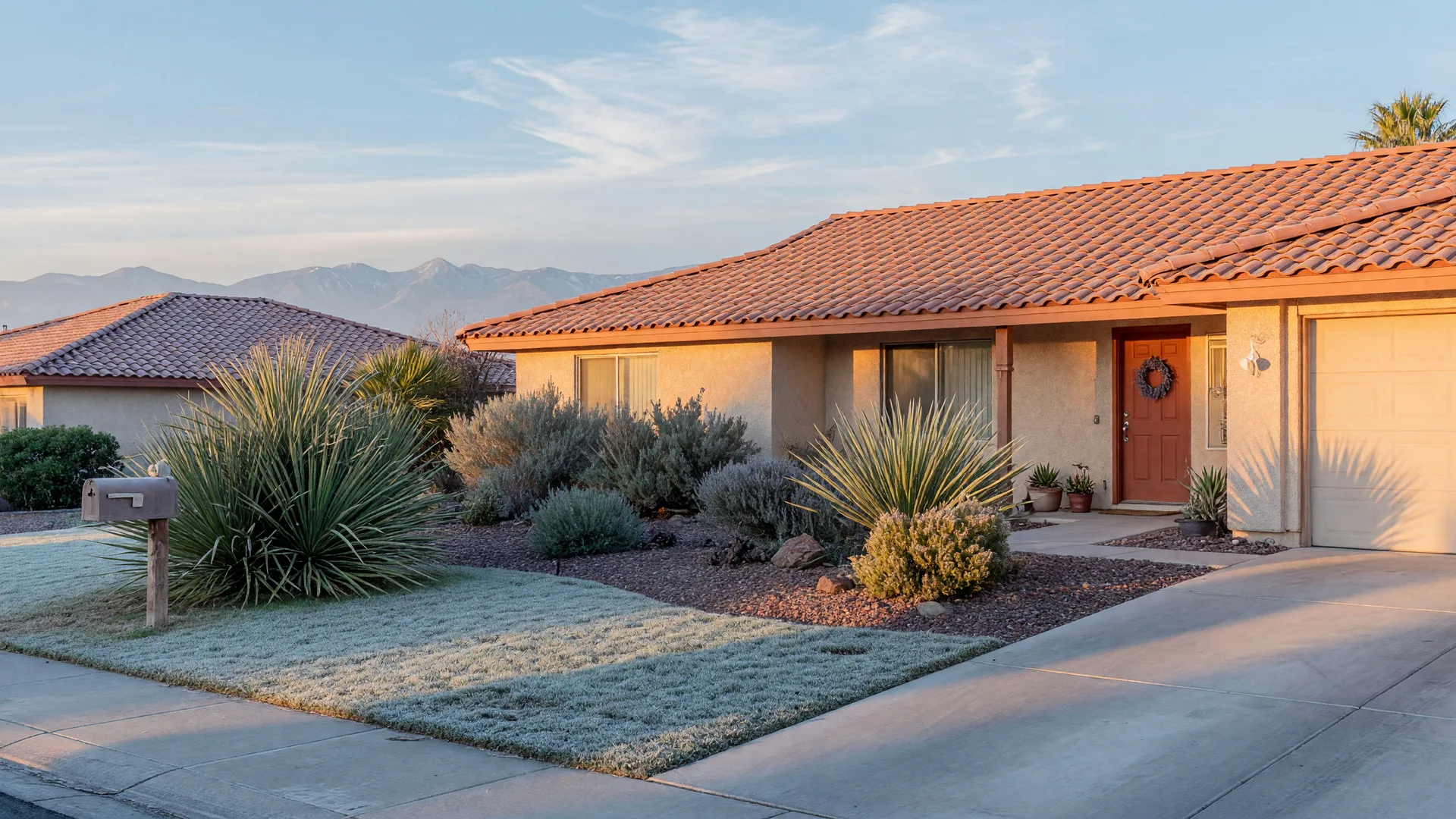
Las Vegas winters are genuinely mild, with December and January average lows in the upper 30s, but freezing nights still happen, and a single hard freeze can burst an exposed pipe, crack a pool line, or kill frost-sensitive landscaping. October is the month to get ahead of it: service the furnace before you need it, protect pipes and irrigation, winterize the pool the right way, and make your yard frost-ready. This checklist walks through each task in the order I tell my own clients to do it, with the desert-specific details most generic winterizing guides get wrong.
Full disclosure: this list is practical, not glamorous. But the homeowners who do these chores in October are the ones who never have mid-January emergencies, and when it comes time to sell, a documented maintenance rhythm is one of the strongest quiet signals a buyer can get.
Why a Las Vegas House Needs a Winter Plan at All
People outside Nevada assume the desert never gets cold. The reality: average December and January overnight lows sit around 39 to 41 degrees, and the valley's average first frost date falls in mid-January based on recent climate data. Most winters bring only a handful of freezing nights, and they are usually brief, but desert temperature swings are large and sudden, and that is exactly what damages homes. A house comfortable at 75 degrees in the afternoon can face 28-degree pipes by 5 a.m.
The good news is that the total workload is small, maybe an afternoon with a screwdriver and a phone call to your HVAC company. The even better news is that most of it is cheaper to do now than the repair it prevents.
Furnace and Heating: Service It Before You Need It
The single most important October task is proving your heater still works while the weather is pleasant. Turn your system on now, run it for twenty minutes, and listen and smell for anything unusual. Then book an annual tune-up with a licensed HVAC company, which typically includes cleaning or replacing the filter, clearing vents and registers, inspecting burners, checking the heat exchanger for cracks, testing ignition and thermostat calibration, checking electrical connections, and cleaning the condensate drain.
Swap in a fresh filter yourself before the season starts, and replace the batteries in your carbon monoxide and smoke detectors while you are at it. Gas furnaces, water heaters, and fireplaces all produce carbon monoxide, and detectors are the cheapest insurance the house has. If your property uses a heat pump instead of a gas furnace, have it checked in cooling (reverse-cycle) mode now so you do not discover the reversing valve failure on the first 40-degree night.
Pipes, Hose Bibs, and Irrigation Lines
Desert winters can absolutely burst pipes, and the usual suspects are the ones in unconditioned space: the hose bib on an exterior wall, irrigation lines and their backflow preventers, and runs in a garage or attic that lack insulation. Wrap exposed pipes in foam insulation sleeves from any hardware store, cover outdoor hose bibs with inexpensive insulated faucet covers, and protect irrigation backflow devices with insulated covers or a DIY wrap.
Before the first freeze threat, drain and disconnect garden hoses, and shut off irrigation to beds that can go dormant, or set your smart controller to water less frequently and only in the morning so moisture does not sit on foliage overnight. On the rare nights a freeze is actually forecast, the classic moves still work: open cabinet doors under sinks on exterior walls, and if a pipe does freeze, never use an open flame to thaw it, use a hair dryer or space heater at a safe distance.
Pools Keep Running in Las Vegas: The Right Winter Care
Here is where most generic advice goes wrong: Las Vegas pools generally stay open year-round because the water rarely approaches freezing, and the pool itself should not be drained, since a full pool is what protects the structure from ground pressure and damage. Winterizing in the desert means preparing the water and equipment for slower chemistry and the occasional cold snap, usually in October or November.
Give the pool a deep clean: skim, brush, and vacuum. Balance the chemistry, pH, alkalinity, and calcium hardness, then shock and add an algaecide. Lower the water level a bit, below the skimmer line, but never drain the pool. Keep the pump circulating, even on a reduced schedule in winter, so lines do not sit with stagnant water, and use a pool cover to keep debris out and heat in. If you have a heater, keep it serviced so a cold snap does not find a broken unit; freeze protection for plumbing and equipment is what the heater is really buying you in winter.
Frost-Ready Landscaping
Desert landscaping is tougher than it looks, but the frost-sensitive plants are the tropicals and tender perennials: bougainvillea, hibiscus, lantana, and young citrus in containers. Cover frost-sensitive plants with frost cloth or breathable fabric on freezing nights, supporting the fabric so it does not crush foliage. Move potted plants to a covered patio or up against a warm wall, and cut back spent perennials. Adjust your irrigation controller for cooler months and reduced water needs, since overwatering a dormant yard in winter invites rot and pests.
A small note for buyers: the age and condition of the irrigation system is a legitimate inspection point in Nevada, since controller failures and cracked lines are the most common desert-yard repairs. When you tour homes this fall, glance at the timer box and ask when the drip system was last serviced.
Seals, Windows, Garage, and Travel Prep
Winter is also when the little drafts show up. Replace worn weatherstripping on exterior doors, check the sweep on the bottom of the garage door, and consider a door draft stopper where you feel cold air. Las Vegas homes with single-pane windows or older sliders lose a surprising amount of heat on those 39-degree nights, and the fix, insulating curtains or a window film kit, pays back fast on the utility bill.
Many Las Vegas families travel for Thanksgiving and winter holidays, so fold in a quick travel prep pass: set the thermostat to a safe setback, 55 to 60 degrees, turn off and drain exterior hoses, unplug non-essential electronics, and if your water heater is in an unheated garage, wrap it or verify its insulation. Ask a neighbor to check the mail and the property, or use a smart camera, and your home returns the same way you left it.
Whether you own in Summerlin (89135, 89138), Henderson (89052, 89074), Mountain's Edge (89178), Aliante (89084), or the Northwest Valley (89131, 89149), this October checklist is the same, and it protects your investment for almost nothing. If you are shopping right now, search current listings in your target ZIP and I will point out the maintenance details worth asking about before you make an offer, including furnace age, irrigation condition, and pool equipment dates.
Buy Smarter, Own Confidently
A well-maintained home is a better investment, period.
When you buy with me, I help you read a home's maintenance story before you commit: HVAC age, irrigation health, pool equipment, and the disclosure details that matter in the desert.